Asscher Diamond Price Guide 2026
Realistic costs by carat and quality — and how to spend wisely
Quick answer
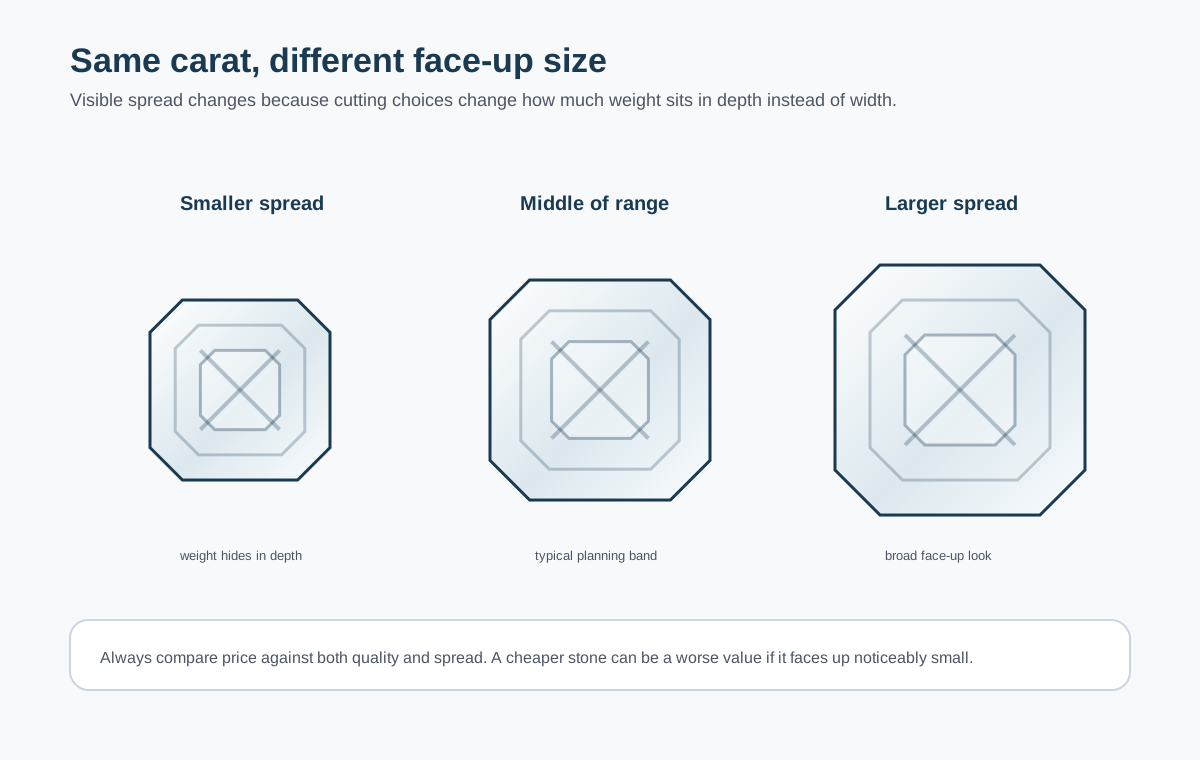
Natural Asscher cuts typically cost 15–30% less per carat than comparable round brilliants. For most buyers, the practical sweet spot is G–H color and VS2 clarity with good proportions. Lab-grown Asschers often run 40–70% less than natural. Face-up size can look smaller than a round of the same carat because Asschers are cut deeper — many people step up slightly in carat and still spend less than an equivalent round.
Key takeaways
- Asschers usually cost less per carat than rounds of the same color and clarity
- G–H / VS2 is the value zone for natural stones; chase higher grades only if you care about the report
- Proportions and video matter more than a single “cut” label on the certificate
- Lab-grown opens larger sizes or higher clarity at the same budget
- Compare the same approximate specs across 2–3 retailers before buying
Price ranges by carat (natural diamonds)
These figures are editorial orientation ranges for natural Asscher diamonds, not a live price index or quotation. The current edition does not preserve a fixed, auditable inventory sample, so the ranges should be treated as directional until verified against current listings. Price can vary materially with carat, color, clarity, measurements, polish, symmetry, certification and seller.
How to read this table: these are editorial orientation ranges carried forward for budget planning. They are not a live retailer scrape, measured median, appraisal, or quote. For a real purchase, compare current candidates with the same origin, carat band, color, clarity, grading lab and similar dimensions.
| Carat | Premium (G–H, VS1+) | Very good (G–I, VS2) | Good value (H–J, SI1–VS2) |
|---|---|---|---|
| 0.50 ct | $1,500 – $2,500 | $1,200 – $2,000 | $900 – $1,500 |
| 1.00 ct | $4,500 – $7,500 | $3,500 – $6,000 | $2,800 – $4,500 |
| 1.50 ct | $8,500 – $14,000 | $6,500 – $11,000 | $5,000 – $8,500 |
| 2.00 ct | $15,000 – $25,000 | $12,000 – $20,000 | $9,000 – $15,000 |
| 3.00 ct | $30,000 – $50,000 | $24,000 – $40,000 | $18,000 – $30,000 |
Methodology note: these are directional 2026 retail estimates, not medians from a preserved dataset. Verify current inventory before making a purchase. Future price-index updates will record sample date, retailer set, filters and sample count.
Compare price this way
- Match the basics: compare natural with natural or lab-grown with lab-grown, then keep carat, color and clarity reasonably close.
- Compare millimeter spread: two 1.00 ct Asschers can face up differently if one hides more weight in depth.
- Check visual quality: a cheaper stone with windowing is not a bargain.
- Normalize price per carat only after quality is comparable: $/ct is a comparison tool, not a quality score.
| Candidate | Price | Carat | Price/ct | Face-up note |
|---|---|---|---|---|
| A | $5,200 | 1.00 ct | $5,200/ct | Good spread, balanced pattern |
| B | $4,850 | 1.02 ct | $4,755/ct | Smaller spread, obvious windowing |
Illustrative example only. Candidate B is cheaper per carat but can still be poorer value if you dislike its face-up appearance.
What drives Asscher pricing
- Carat weight — Price rises non-linearly; popular sizes (1.00, 1.50, 2.00) show clear jumps.
- Color & clarity — Step cuts show both more than brilliant cuts. G–H and VS2 is the practical sweet spot for most buyers.
- Cut / proportions — Length-to-width near 1.00–1.05, balanced depth, and a clean windmill or concentric-square pattern matter more than a report grade alone. See How to Choose.
- Certification — GIA is preferred for natural diamonds.
- Selection depth — Asschers are less common than rounds; top proportions can command a premium when inventory is thin.
Asscher vs round: value comparison
On a per-carat basis, a quality Asscher is usually meaningfully cheaper than a round of the same color and clarity. The trade-off is face-up size: Asschers are often cut deeper, so they can look smaller than a round or emerald of the same carat weight.
Many buyers step up slightly in carat (for example 1.20–1.30 instead of 1.00) to compensate and still spend less than an equivalent round. Whether that trade-off is worth it depends on how much you value the Art Deco look and hall-of-mirrors pattern versus maximum sparkle and face-up size.
Lab-grown Asscher pricing
Lab-grown Asscher cuts typically cost 40–70% less than comparable natural stones. A 1–2 carat lab-grown Asscher in strong quality is often attainable at a fraction of the natural price, which makes larger sizes or higher clarity realistic on the same budget.
For comparison shopping and when lab-grown makes sense, see the lab-grown Asscher guide. For where to shop, use Best Places to Buy (Blue Nile and Ritani for Asscher shopping).
How to get the best value
- Target G–H color and VS2 clarity unless you have a strong preference for higher grades.
- Insist on good proportions and review 360° or high-resolution video — essential for Asschers.
- Compare the same approximate specs across two or three retailers.
- Consider lab-grown if maximum size or budget is the priority.
- Use retailers with clear return policies so you can evaluate the stone with confidence.
Common pricing mistakes
- Paying up for VVS when VS2 is eye-clean — On a well-cut Asscher, the visual difference is often minimal at normal viewing distance.
- Ignoring proportions for a “bargain” price — A cheap Asscher with poor L/W or heavy windowing is a poor value.
- Comparing only carat and price — Without color, clarity, and video, the comparison is incomplete.
- Skipping lab-grown entirely — If size is the goal, lab-grown can deliver more face-up presence per dollar.
Future price-index protocol: substantive price updates should record the observation date, retailers sampled, natural/lab status, carat band, color and clarity filters, grading-lab requirements, number of qualifying listings, and summary statistic used. That methodology will allow later editions to distinguish measured market observations from editorial guidance.
How to use it: use the table to set an initial budget, then compare live stones with closely matched carat, color, clarity, grading laboratory and dimensions. Fancy-shape diamonds do not receive a GIA overall cut grade in the way standard round brilliants do, so buyers should inspect measurements, polish, symmetry and face-up appearance rather than relying on a single cut grade.
What the current table is not: a statistically sampled index. The original edition did not preserve a fixed sample size, listing IDs, observation timestamp, or complete retailer-level dataset. We therefore do not present the ranges as measured medians or claim greater precision than the underlying evidence supports.
What the current table is: an editorial estimate intended to help buyers understand order-of-magnitude retail pricing. It is not a transaction-price database, appraisal, valuation, or continuously refreshed market feed.
Turn price into a buying decision
Once you have two real listings, normalize them before deciding which retailer or stone is cheaper.
Methodology & evidence
Reproduce a current comparison yourself
- Choose natural or lab-grown; do not mix the two markets.
- Set a narrow carat band, such as 0.95–1.05 ct.
- Hold color, clarity and grading-lab requirements constant.
- Record the price and report dimensions for each candidate you are seriously considering.
- Compare price alongside face-up spread, pattern, windowing and inclusion placement.
If we later publish measured market statistics, the raw observations must follow the Price Observation Methodology and retain the fields in the downloadable CSV template.
Next steps
Buying Asscher hub How to Choose Best Places to Buy
Normalize two prices
The Asscher Price Comparison Calculator compares price per carat and price relative to a simple visible-area proxy. It uses your entered values and does not claim live market pricing.
Compare Asscher inventory at our recommended partners (affiliate links).
Sources & further reading
- GIA: Is there a cut grading system for fancy-shaped diamonds? — GIA notes that an internationally accepted visual cut-grading system for fancy shapes is not currently available.
- GIA: How GIA Grades Diamonds — grading process, measurements, clarity, polish and symmetry.
- GIA 4Cs: Anatomy of a Diamond — definitions of table, crown, girdle, pavilion and depth-related light leakage.
- Related AsscherDiamond.com guides: How to Choose, Lab-Grown Asschers, Asscher vs Emerald, and Best Places to Buy.
Educational only; not an appraisal or financial recommendation. Diamond prices and inventory change continuously. Verify current listings, grading reports and seller policies before purchasing. We may earn commissions from affiliate links.
How to judge Asscher quality
Use the report to screen, then use pattern and video to choose.
Certification & GIA
Read the grading report without expecting an Asscher cut grade.
Certification guide →Asscher size & dimensions
Carat is weight. Use millimeters and spread to understand what you will actually see.