Asscher Windowing & Extinction: How to Spot Light-Performance Problems
Separate beautiful contrast from see-through or dead-looking areas
Quick answer
Windowing is a see-through effect where light escapes instead of returning attractively to the viewer. Extinction is darkness caused by facets reflecting obstructed or non-illuminated areas. Asschers need some dark contrast for their pattern, but broad persistent windows or dead zones are warning signs.
Key takeaways
- Do not confuse healthy contrast with extinction.
- A window that persists through motion is more concerning than a brief transparent flash at one angle.
- Large black zones that never resolve can make the stone look dead.
- Shallow or poorly coordinated proportions can contribute to weak behavior, but numbers alone cannot diagnose it.
- Use comparable 360° videos or inspect in multiple lighting environments.
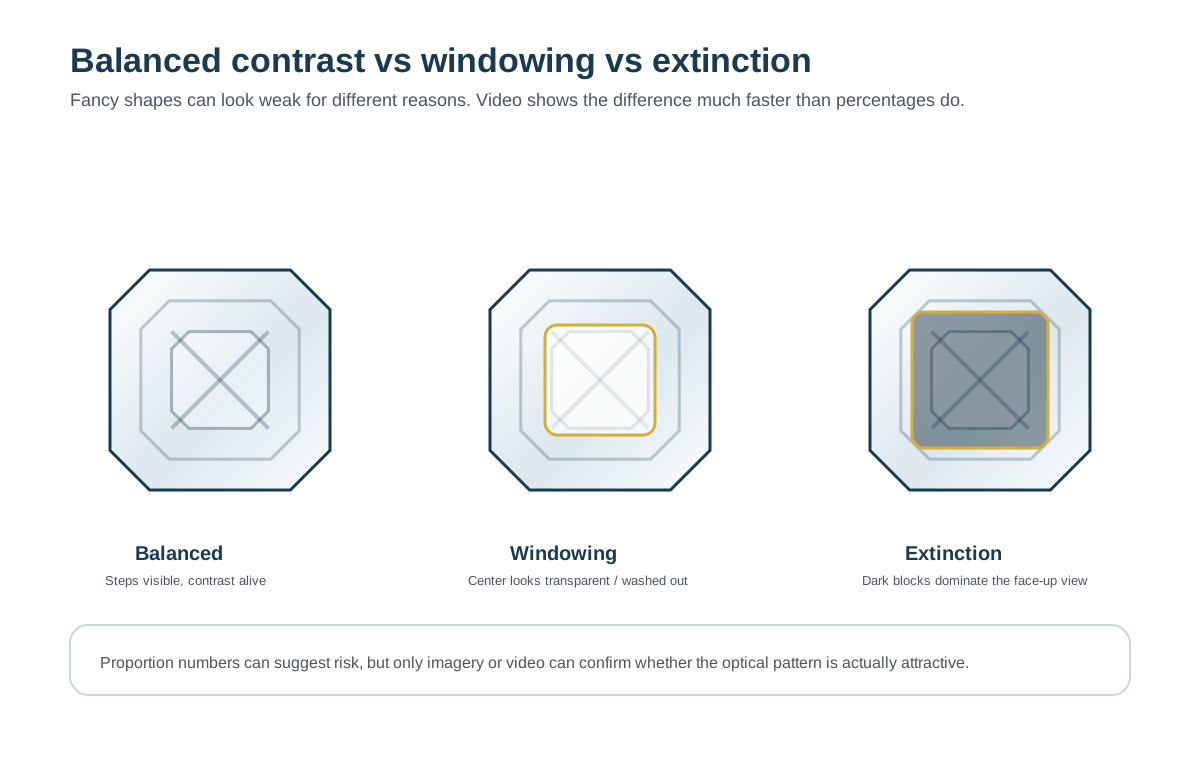
What windowing looks like
A window is an area where the diamond becomes sufficiently transparent that background information seems to show through instead of being returned as reflected light. In step cuts, a large central window can make the stone look watery or glassy.
What extinction looks like
Extinction appears as dark facets or zones. Some darkness is normal because a diamond reflects its environment, including the viewer. The problem is excessive, persistent darkness that dominates the face-up view and does not exchange with lighter reflections as the stone moves.
Healthy Asscher contrast
The classic Asscher look depends on broad alternating bands of light and dark. Think architectural rhythm, not maximum sparkle. Healthy contrast produces a crisp windmill and sense of depth. Excessive extinction produces a dead patch.
Why weak behavior happens
Light performance comes from the whole three-dimensional facet arrangement. Depth, table, pavilion geometry, crown structure and facet alignment all play a role. That is why two diamonds with similar headline percentages can look very different.
How to test a diamond online
- Use neutral, high-resolution 360° video when available.
- Watch the center and major steps, not only edge sparkle.
- Pause at several angles.
- Look for zones that stay transparent or black across movement.
- Compare against at least one stronger candidate.
How to test in person
View the diamond under diffused ambient light as well as bright jewelry-store spotlights. Spotlights can make almost every diamond sparkle. Normal room light makes it easier to evaluate whether the step pattern remains attractive without theatrical illumination.
Windowing vs healthy contrast vs extinction
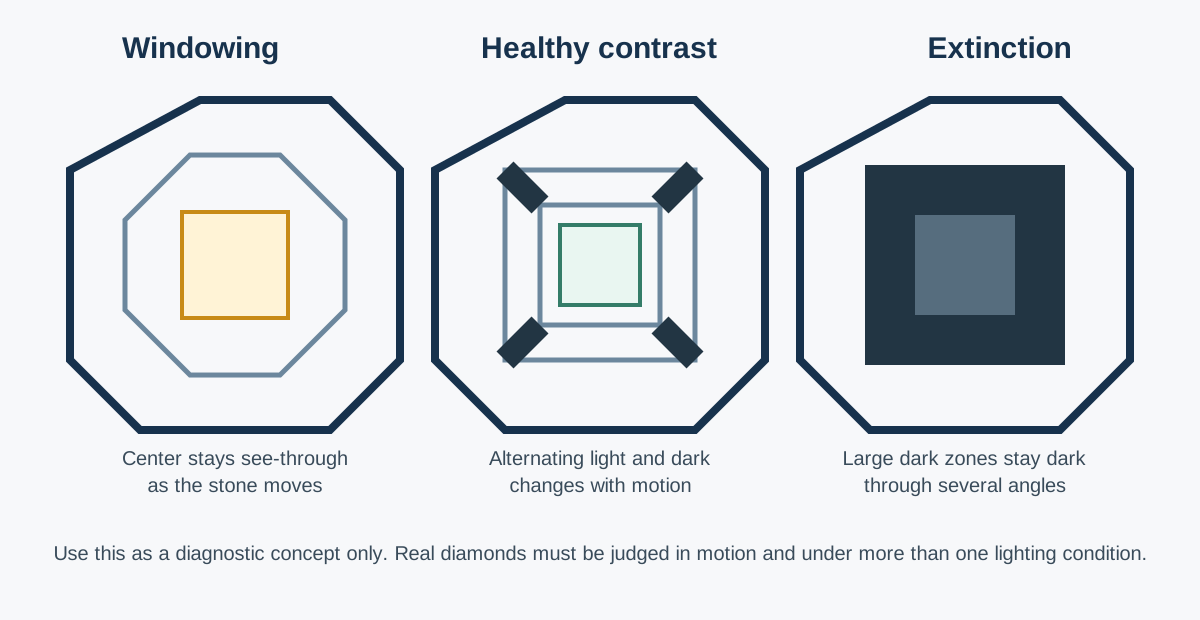
| What you see | What usually happens in motion | Buyer response |
|---|---|---|
| Windowing | A see-through patch stays in roughly the same area as the diamond rotates. | Compare against another candidate. Persistent central windowing is a strong reason to reject. |
| Healthy contrast | Light and dark steps trade places; the pattern remains organized. | Keep evaluating. Darkness by itself is not a defect. |
| Extinction | Large areas remain very dark through several angles or lighting changes. | Check another video/lighting setup; reject if the dead area persists. |
If you can see background detail through the center, or a large dark block refuses to change as the stone turns, do not let attractive depth/table numbers talk you into the diamond.
Primary references & methodology
- GIA: How GIA Grades Diamonds — grading process, proportions, polish and symmetry.
- GIA: fancy-shape cut grading FAQ — explains that GIA does not currently assign an overall cut grade to fancy shapes.
- AsscherDiamond.com research methodology — how we distinguish laboratory facts, screening ranges and editorial observations.
- GIA: Diamond Cut – The Wow Factor — explains why overall face-up appearance and light/dark pattern matter more than one proportion number.