Asscher Table Percentage Guide: What the Number Means
The top facet is important—but it cannot grade the diamond for you
Quick answer
The table is the large flat facet on top of the diamond. For Asschers, table percentage influences the open step-cut look, but it should be interpreted alongside depth, crown structure and visual pattern. A rough mid-50s to mid-60s screening band is common in attractive stones, not an official ideal standard.
Key takeaways
- Table percentage measures the top facet relative to diamond width.
- A large table can make the center look more open; a smaller table can change contrast and crown presence.
- No table percentage guarantees light performance.
- Compare table and depth together.
- Judge the final stone in motion.
What table percentage measures
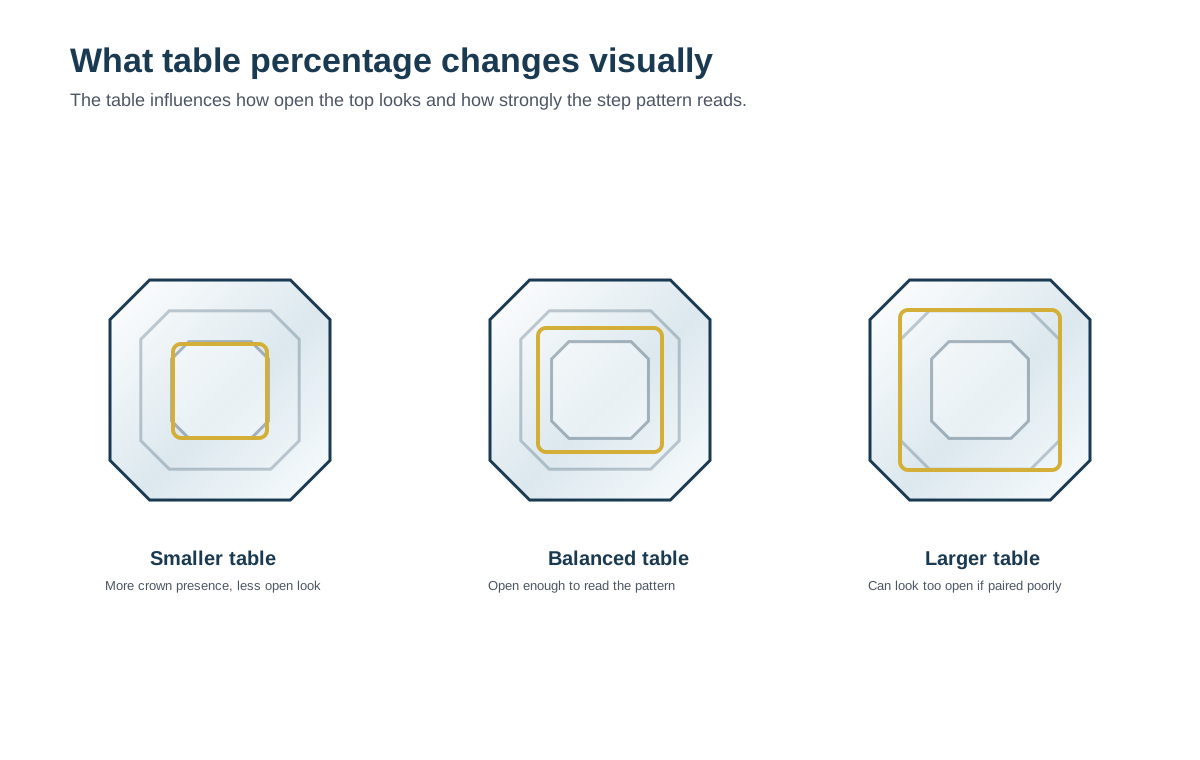
Table percentage describes the width of the table relative to the diamond's overall width. Because the table is the main window into an Asscher's internal steps, its size changes the visual balance of the face-up pattern.
Practical screening range
You will frequently encounter attractive Asschers with tables in roughly the mid-50s through mid-60s. That band is useful for comparison, but there is no internationally accepted Asscher table standard that turns a number into a cut grade.
What to watch with a very large table
A large table can reduce the visual presence of the crown and create a broad, open center. In some stones that openness is elegant; in others it can amplify windowing or make the pattern feel flat. The number must be checked against actual imagery.
What to watch with a smaller table
A smaller table can create a more pronounced crown and different balance of reflection, but too small is not automatically better. If the pattern becomes dark, busy or visually compressed, the theoretical advantage disappears.
Pair table with depth
Do not rank Asschers by table alone. A 61% table with 67% depth is a different three-dimensional design from the same table on a much shallower or deeper stone. Compare the full report measurements and then validate visually.
The simple video test
Rotate the stone slowly. You want the steps to alternate between light and dark in a coherent way. If the center stays washed out, transparent or dead across a broad range of angles, the table/depth combination may not be producing the look you want.
Primary references & methodology
- GIA: How GIA Grades Diamonds — grading process, proportions, polish and symmetry.
- GIA: fancy-shape cut grading FAQ — explains that GIA does not currently assign an overall cut grade to fancy shapes.
- AsscherDiamond.com research methodology — how we distinguish laboratory facts, screening ranges and editorial observations.
Screening ranges on this page are editorial starting points, not an official overall Asscher cut grade. See the Research Center for methodology and source context. Research methodology →