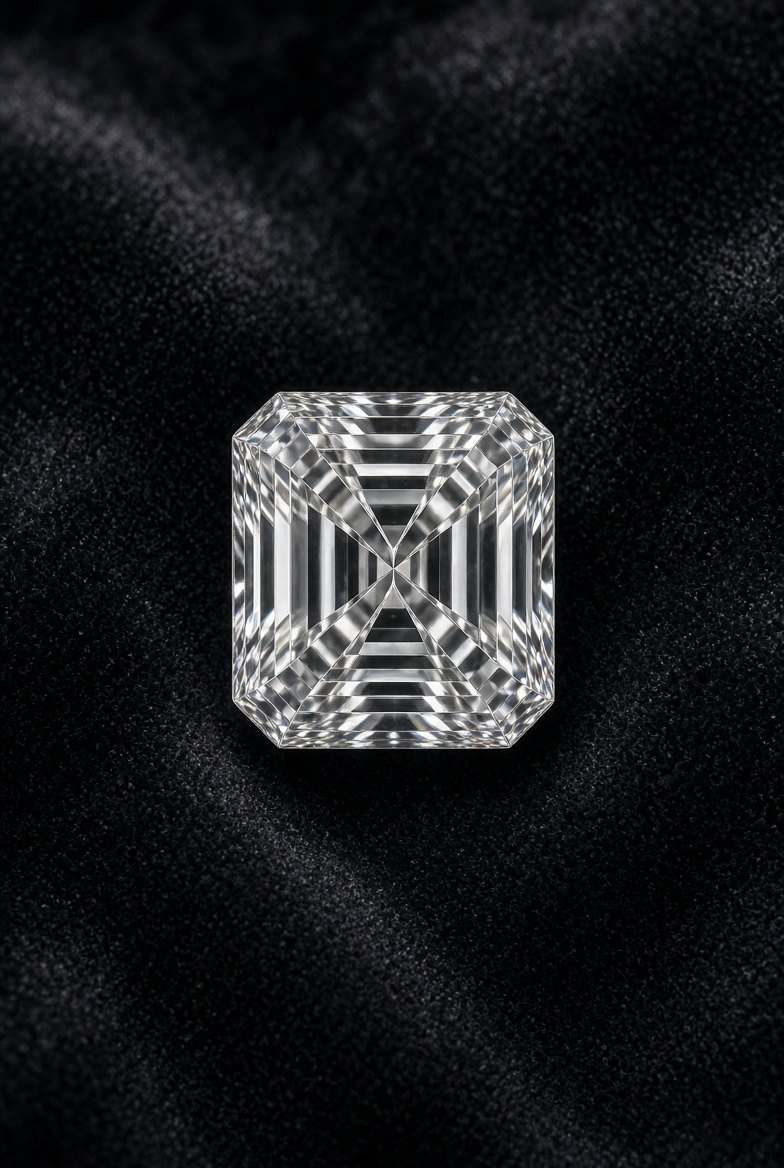
Face-up geometry
Cropped corners, concentric steps and the X-shaped windmill are what separate an Asscher from a brilliant or a long emerald.
Screen proportions and reports here, then browse Asscher inventory at retailers we evaluate for imaging, returns, and selection depth.
Open vetted inventory with 360° video and report access.
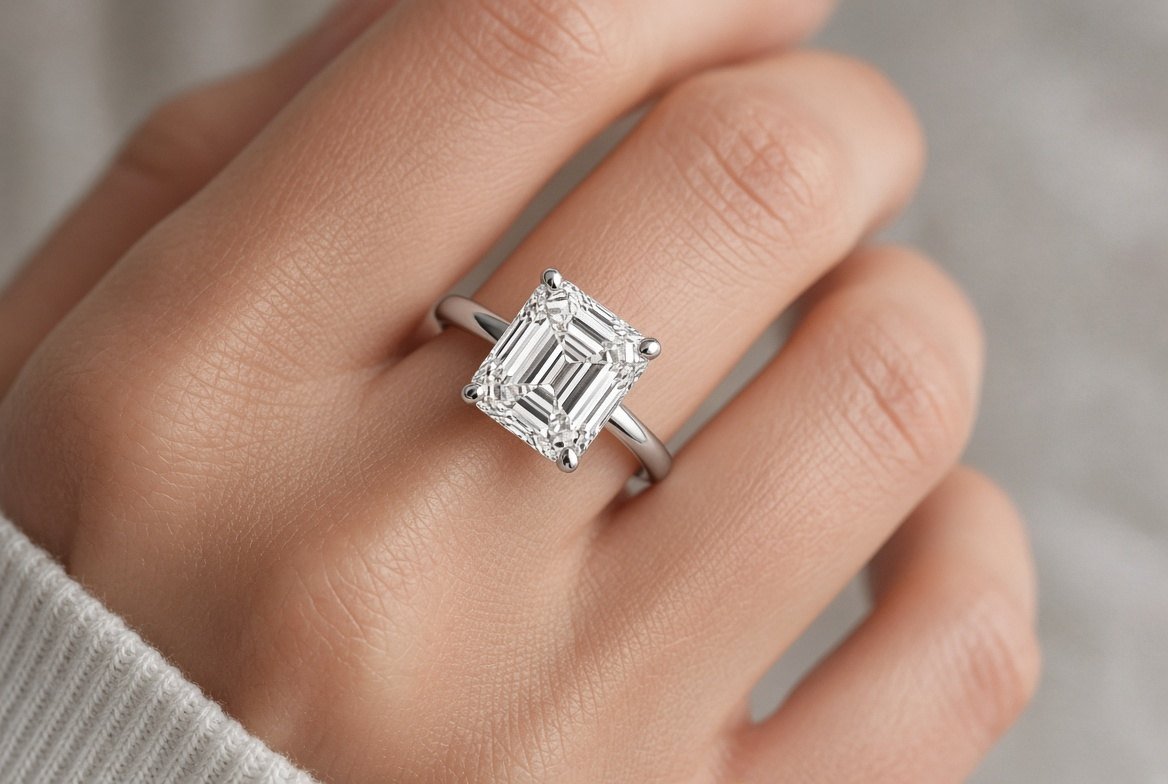
Original Asscher visuals created for this site — square step-cut geometry, cropped corners and the hall-of-mirrors pattern — not generic round-brilliant stock.
Cropped corners, concentric steps and the X-shaped windmill are what separate an Asscher from a brilliant or a long emerald.
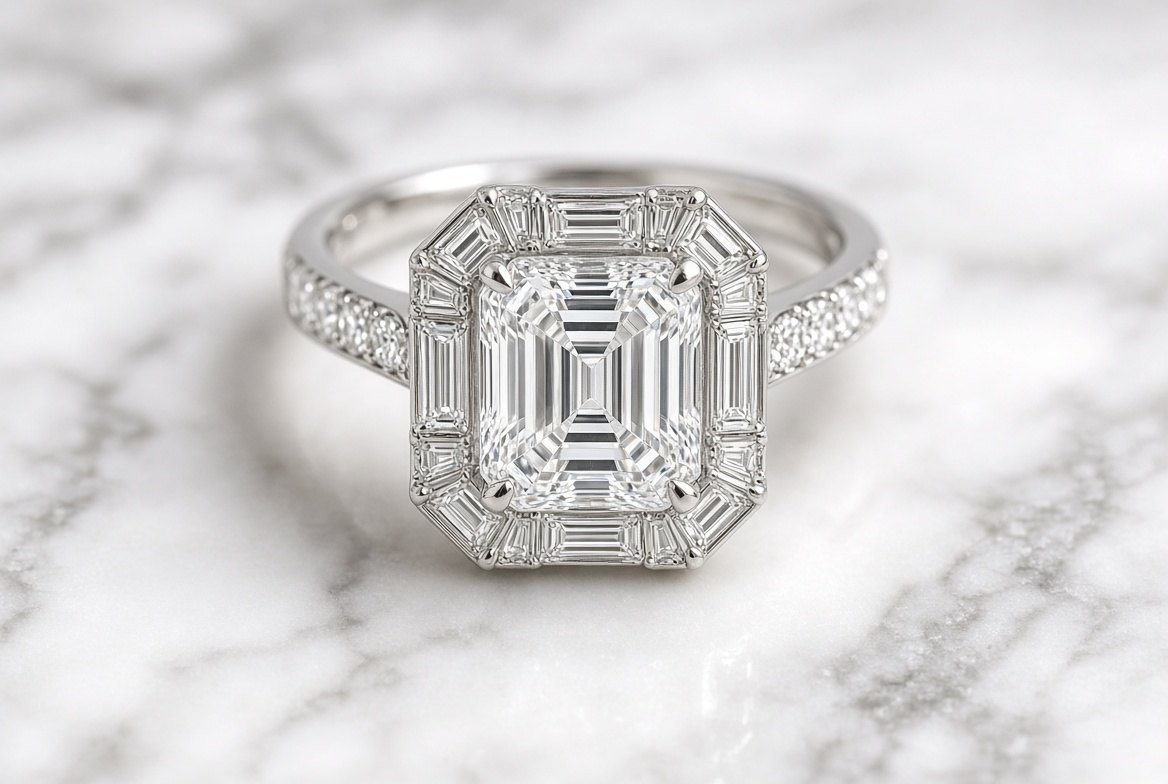
Halo and baguette frames echo the cut’s Art Deco origin and keep the square outline readable.
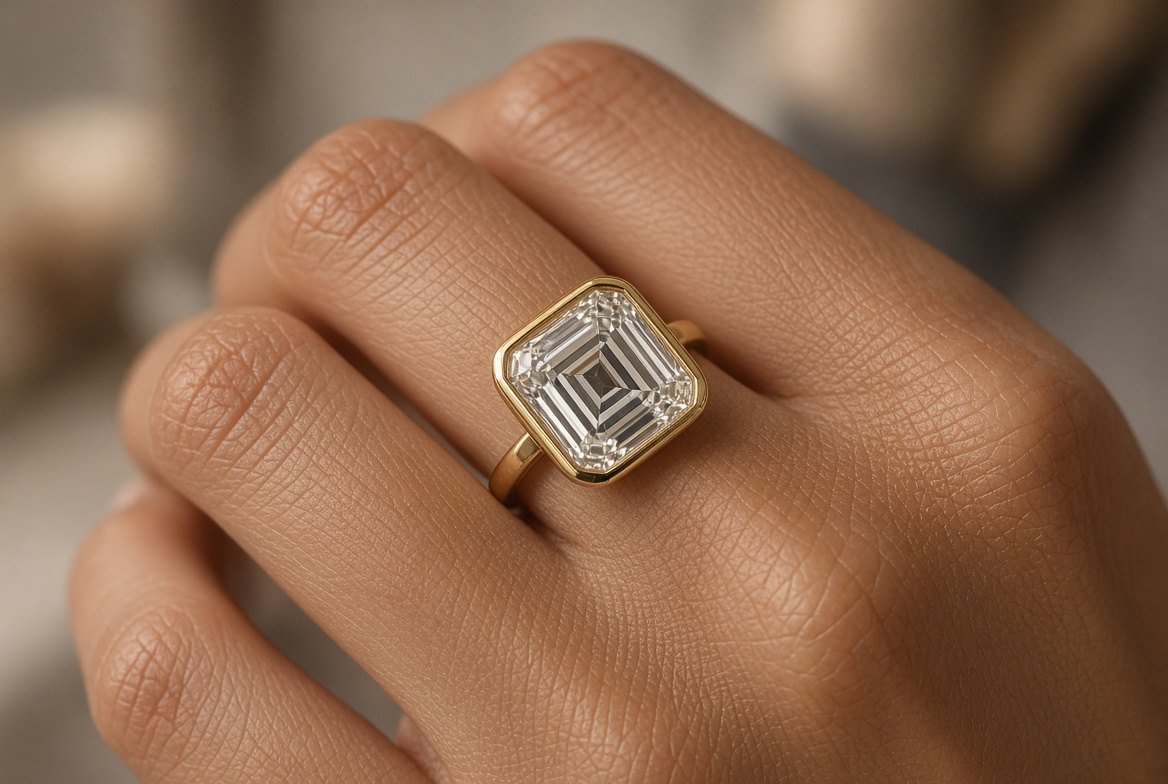
A bezel protects the corners and shows how an Asscher reads as architecture rather than sparkle spray.
The site is organized around the task you are trying to complete—not around a pile of articles.
Understand the shape, step facets, windmill pattern, clarity/color behavior and how Asschers differ from brilliant cuts.
Start with the cut →Work through origin, visible size, proportions, clarity, color, grading report, price and retailer checks in order.
Open the buying system →Enter report values and compare dimensions, screening signals, normalized price metrics and up to four stones side by side.
Compare my candidates →Open Blue Nile or Ritani Asscher listings after you know origin, size, and quality floor—or start browsing and screen stones as you go.
Browse partner inventory →We recommend partners with Asscher inventory depth, report access, and usable returns—not the widest catalog of every shape.
Broad Asscher selection; compare specs and price side by side.
Filter Asschers at Blue NileOnline shortlist with optional in-person preview.
Shop Asschers at RitaniCompare how we evaluate retailers →
We may earn a commission at no extra cost to you. Affiliate disclosure
The cropped corners and concentric step facets create the geometric hall-of-mirrors pattern that distinguishes an Asscher from brilliant-style cuts.
Five decisions cover most of the expensive mistakes buyers make.
The utilities organize decisions from data you enter; they do not invent a fancy-shape cut grade or live-market price.
Key concepts now have dedicated diagrams so buyers can understand how spread, proportions and comparisons actually work.
See how Asscher differs from emerald, princess, cushion, radiant and round.
Open shape comparisons →Go directly to the data or concept behind a buying question.
Ratio, depth, table, windmill pattern, windowing, clarity, color and grading reports.
Explore quality →Carat-to-mm planning references, face-up spread and dedicated 1, 1.5 and 2 ct guides.
Explore size →Directional price guidance plus a transparent protocol for future measured observations.
Explore price →Asscher vs emerald, princess, cushion, radiant and round—based on optical behavior and buying trade-offs.
Compare shapes →Proportion reference, dimension dataset, bibliography, source registry and price-index framework.
Open research →How inventory depth, imaging, report access, returns and price transparency are assessed.
Compare retailers →Start with the report values, then verify what numbers cannot tell you in video.