Asscher vs Emerald Cut
Two step-cut icons — shape, sparkle, size perception, price, and which one suits you
Quick answer
Asscher is square with a centered windmill pattern and more depth of look. Emerald is rectangular with a longer hall-of-mirrors effect and usually looks larger face-up for the same carat. Choose Asscher for geometry and pattern; choose Emerald for elongation and maximum size appearance.
Key takeaways
- Asscher ≈ square (L/W 1.00–1.05); Emerald ≈ rectangular (often 1.30–1.50)
- Asschers often look smaller face-up than emeralds of the same carat because they are cut deeper
- Both show inclusions and color more than brilliant cuts — clarity and color standards should be similar
- Asscher: centered “X” / windmill; Emerald: long parallel flashes
- Neither is universally “better” — the decision is about shape preference and size priority
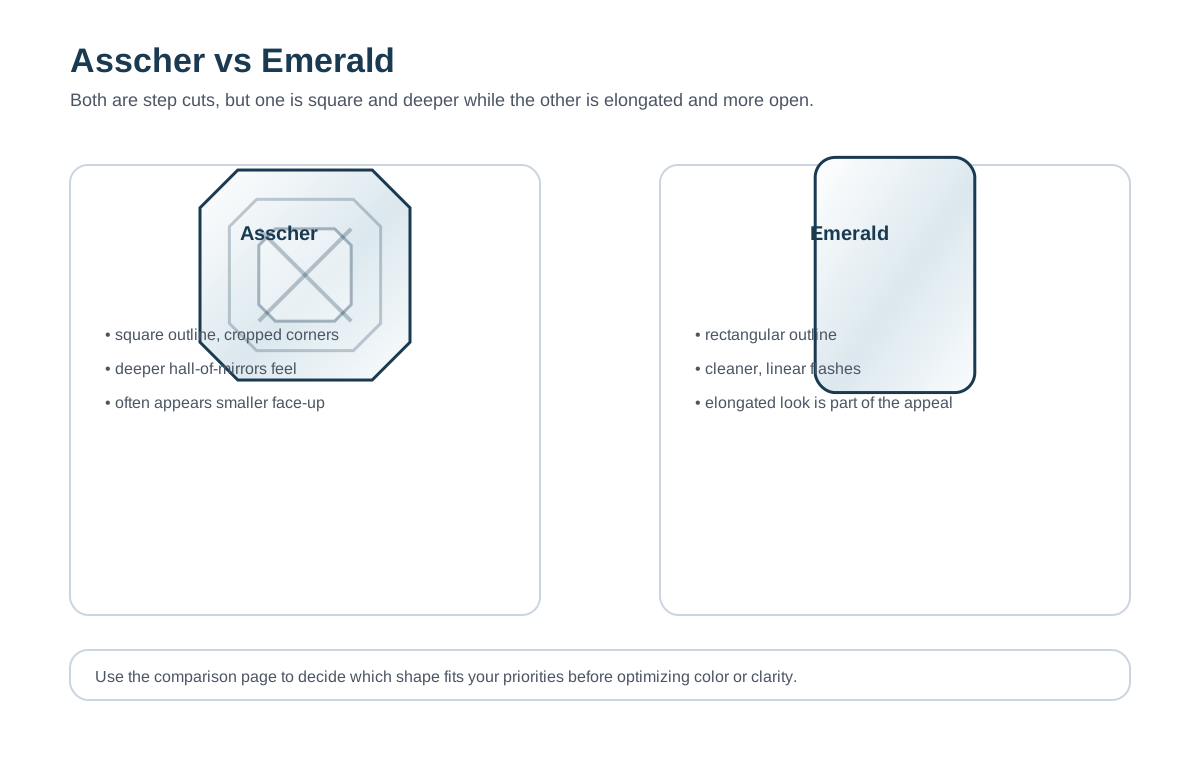
The fastest way to decide
Choose Asscher if…
You want a square outline, clipped corners and a more compact, inward-looking geometric pattern.
Choose emerald if…
You want a longer outline, stronger finger-lengthening effect and a more linear hall-of-mirrors pattern.
Key differences at a glance
| Feature | Asscher Cut | Emerald Cut |
|---|---|---|
| Shape | Square (L/W ≈ 1.00–1.05) | Rectangular (L/W typically 1.30–1.50) |
| Outline | Cropped corners, octagonal look | Cropped corners, elongated |
| Light effect | Centered windmill / X pattern | Long hall-of-mirrors flashes |
| Face-up size | Often smaller for the carat (deeper) | Usually larger face-up for the carat |
| Visual character | Architectural, geometric, Art Deco | Elegant, elongated, classic |
| Finger effect | Square presence | Lengthens the finger |
| Typical price vs rounds | Often 15–30% less per carat | Often less than rounds; competitive with Asscher |
Facets & light performance
The Asscher “windmill”
Pavilion facets converge so that, from above, many well-cut Asschers show an X or windmill pattern inside concentric squares. The effect is more centered and “internal” than on a long emerald.
The Emerald “hall of mirrors”
Emerald cuts use longer parallel steps. Light returns in broad, calm flashes along the length of the stone — a classic hall-of-mirrors look rather than a single centered pattern.
Both are step cuts: less scintillation than rounds or ovals, more about contrast and geometry. Video comparison is the fastest way to feel the difference.
Price & size perception
Asschers are often cut deeper, so a 1.00 ct Asscher can look smaller face-up than a 1.00 ct emerald (or a well-spread round). Buyers who prioritize maximum size for the budget often lean emerald; buyers who prioritize the square pattern accept the deeper cut.
On a per-carat basis both shapes are usually less expensive than comparable round brilliants. Exact pricing depends on the 4Cs and market conditions — see the Asscher price guide.
Durability
Both use cropped corners, which are more durable than sharp points (e.g. princess). Secure four-prong or bezel settings protect the corners on either shape. Neither is fragile when set properly; daily-wear risk is similar and driven more by setting quality than by the cut name.
Who should choose Asscher?
- You want a distinctly square, geometric look
- You like a centered pattern and sense of depth
- You prefer Art Deco or architectural style
- You are happy to trade some face-up size for that silhouette
Who should choose Emerald?
- You want maximum face-up size for the carat weight
- You prefer an elongated look that lengthens the finger
- You like broad, calm flashes rather than a centered pattern
- You want a slightly more widely recognized step-cut style
Quick decision guide
If the stone must look as large as possible for the budget → lean Emerald.
If the stone must look distinctly square with a strong center pattern → lean Asscher.
If you are torn, view high-quality 360° videos of both side by side; the light-performance difference is easier to feel than to describe.
Next steps
How to Choose an Asscher Buying Hub Best Places to Buy
Sources & further reading
- GIA materials on step cuts and emerald / square emerald styles
- Side-by-side video comparison on major retailer platforms
- Related: What is an Asscher, How to Choose, Price Guide
Educational only. Preferences and inventory vary — verify stones in person or via high-quality imaging when possible.
Compare Asscher with other shapes
Start with light personality, then compare outline, face-up size and clarity sensitivity.
Buyer Decision Matrix
Turn size, budget, origin and visual priorities into a buying profile.
Build profile →