Asscher vs Cushion Cut
Geometric steps versus soft brilliant facets — two vintage-inspired looks with very different light
Quick answer
Choose Asscher for crisp geometry, clipped corners and hall-of-mirrors contrast. Choose cushion for rounded corners, softer outlines and much stronger brilliant-style sparkle. Both can feel vintage, but they express that character in completely different ways.
Key takeaways
- Start with light personality: step-cut pattern versus brilliant-style sparkle.
- Compare millimeter dimensions, not carat weight alone.
- Asscher step facets make direct visual inspection especially important.
- Shape averages are not substitutes for comparing actual stones.
- Use the Buyer Decision Matrix if you are comparing several shapes or priorities.
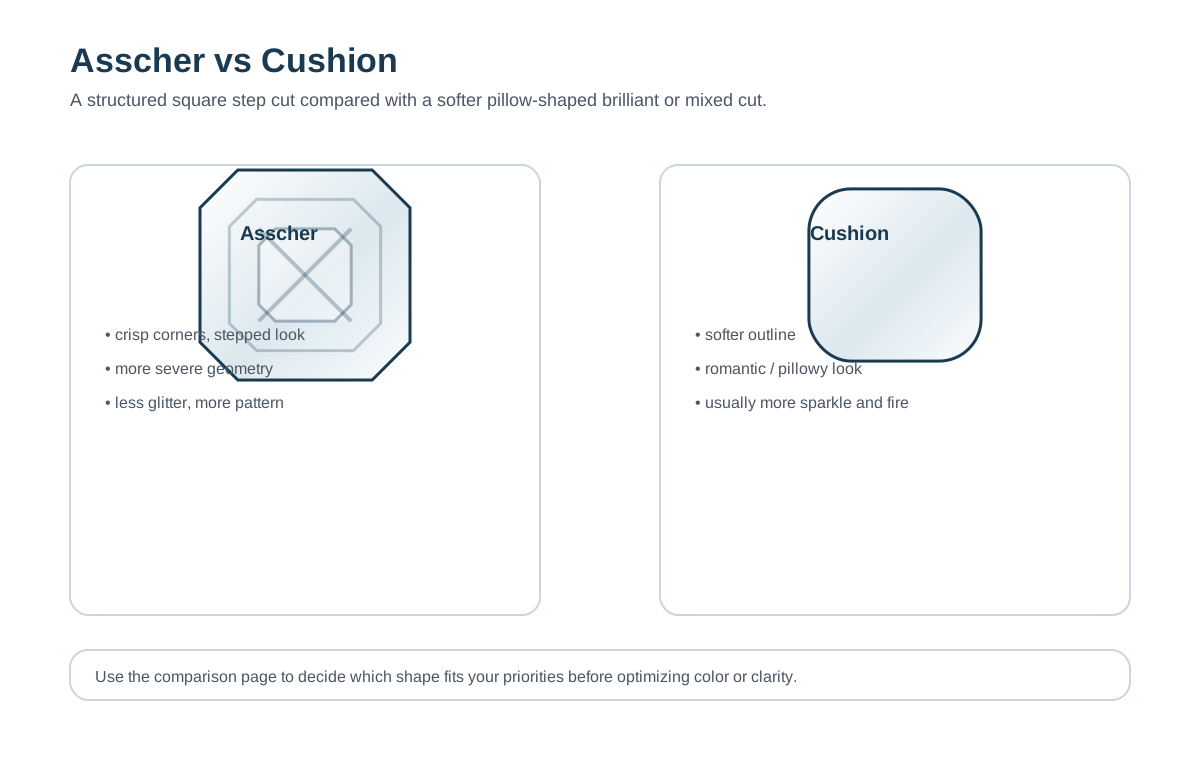
Asscher vs Cushion: comparison at a glance
| Feature | Asscher | Cushion |
|---|---|---|
| Cut family | Step cut | Usually brilliant or modified brilliant |
| Outline | Square/octagonal with cropped corners | Square to rectangular with rounded corners |
| Light style | Broad geometric flashes | More scintillation; can be chunky or crushed-ice |
| Vintage character | Art Deco / architectural | Romantic / antique-inspired |
| Face-up shape | Crisp and structured | Soft and pillowy |
| Clarity visibility | Relatively revealing | Brilliant faceting can mask inclusions more |
| Best for | Pattern and symmetry | Soft outline and sparkle |
Light performance: broad steps versus scintillation
An Asscher creates a disciplined pattern of concentric steps and alternating contrast. Cushions are a broader family: some show large chunky flashes, while modified brilliant cushions can show a finer “crushed ice” texture. Because cushions vary so much, do not treat “cushion” as one optical look. If your preference is calm, geometric structure, the Asscher is more predictable; if you want lively sparkle, cushion has more options.
Outline and style
Both can work in vintage-inspired rings, but their silhouettes send different signals. Asscher is angular, symmetric and Art Deco. Cushion is soft, rounded and romantic. A halo can amplify either shape, yet it does not erase the underlying geometry. See Asscher ring styles before choosing a setting that overwhelms the center stone.
Face-up size and proportions
Cushions range from square to elongated, so length-to-width ratio changes their visual footprint. Asschers usually stay near square. For both shapes, carat is weight rather than visible size. Compare millimeter dimensions. Asscher buyers can use our dimensions guide and dimension reference dataset as planning tools.
Clarity, color and visual inspection
Asscher step facets can make inclusions easier to notice, especially near the center. Cushions often hide inclusions somewhat better but may show body color differently depending on faceting and depth. Grade labels should screen candidates, not replace visual inspection. Asscher-specific thresholds are discussed in the selection guide.
Price and availability
Cushions are common in broad online inventories, while strong Asschers can be a narrower search. Availability matters because a rare combination of size, color, clarity and visual pattern may carry a different price than generic shape averages suggest. Compare actual stones using the same grading and origin criteria rather than relying on a blanket “shape X is cheaper” rule.
Who should choose which?
Choose Asscher if your eye locks onto straight lines, centered geometry and Art Deco restraint. Choose cushion if you prefer rounded corners, romantic softness and more scintillation. If “vintage” is your only requirement, decide whether you mean architectural 1920s geometry or softer antique-inspired sparkle—those are different aesthetics.
Next step: turn preferences into a buying profile
If you are comparing more than two shapes—or balancing budget, size, origin, clarity sensitivity, color sensitivity and setting style—use the Asscher Buyer Decision Matrix. It converts those priorities into a practical Asscher shopping profile and flags when another shape may fit the stated goal better.
Shape guides describe recurring optical and design differences, not guarantees about every diamond. Always confirm the grading report, dimensions and actual video for the stone you are considering.