Asscher Diamond Dimensions in Millimeters: How to Read Length × Width × Depth
The three measurements on the report are more useful than carat alone
Quick answer
An Asscher report typically lists measurements as length × width × depth in millimeters. Length and width describe the face-up footprint; depth describes the stone vertically. For purchase comparisons, those numbers often tell you more about visible size than carat weight by itself.
Key takeaways
- Length and width determine the face-up outline.
- Depth helps explain where weight is carried.
- Divide longer by shorter face-up dimension to calculate length-to-width ratio.
- Compare millimeters between diamonds at similar carat weights.
- Do not chase maximum spread if the pattern becomes weak or windowed.
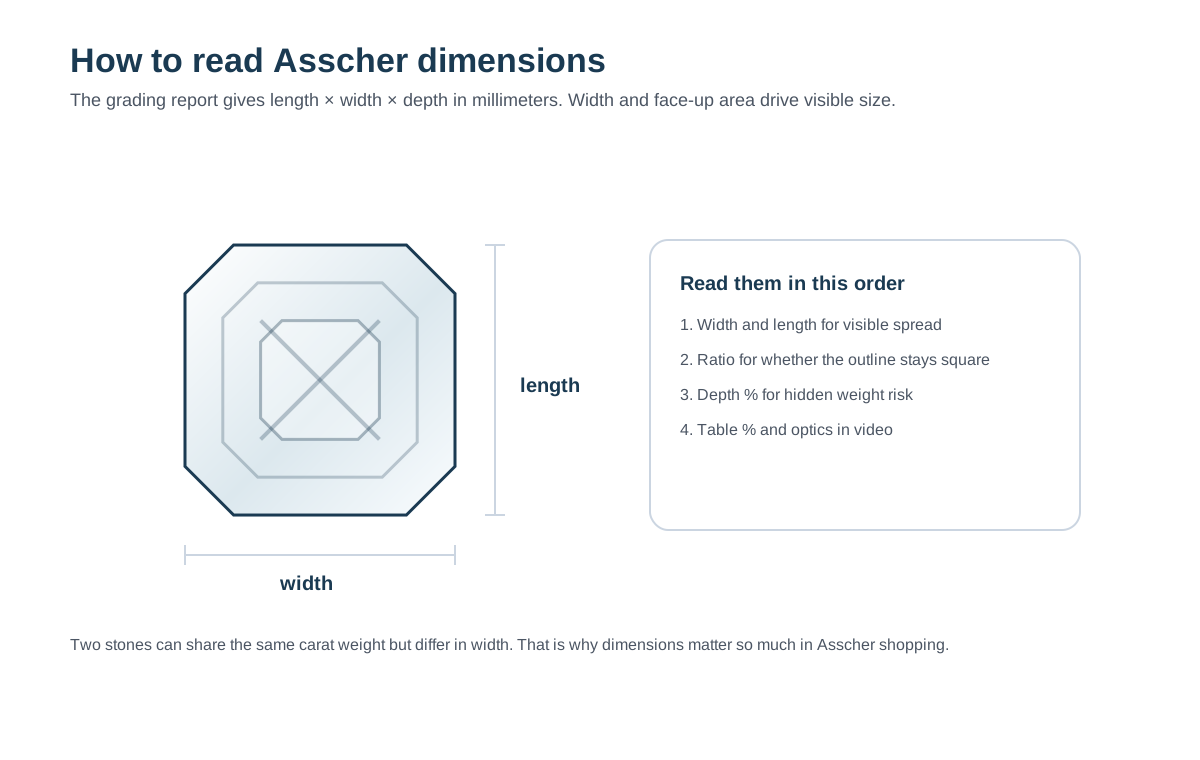
Length × width × depth
If a report lists 5.60 × 5.54 × 3.72 mm, the first two measurements describe the square-ish top view and the third is vertical depth. For an Asscher, the difference between the first two measurements tells you how square the outline is.
Calculate length-to-width ratio
Divide the longer face-up number by the shorter. Using 5.60 ÷ 5.54 gives approximately 1.01—a very square outline. A ratio is a shape descriptor, not a cut-performance score.
Compare equal-carat stones by millimeters
Suppose two diamonds each weigh 1.00 ct. One measures around 5.60 mm wide and another around 5.30 mm. The first can look visibly larger even though the scale reads the same carat. The trade-off is whether the extra spread comes with equally strong optical performance.
Do not overreact to hundredths of a millimeter
Differences such as 5.54 vs 5.58 mm are generally too small to dominate a buying decision. Use dimensions to identify meaningful spread differences, then prioritize pattern, clarity, color and price.
Translate millimeters into ring presence
A 6.2 mm Asscher is not visually identical to a 6.2 mm round because the square clipped-corner footprint distributes area differently. If ring presence matters, print or draw the approximate square dimensions at actual size or compare retailer hand shots cautiously.
Millimeter-first shopping workflow
- Set a budget and approximate target width.
- Filter by carat range.
- Read report dimensions.
- Check ratio and depth.
- Inspect video for windmill, windowing and inclusions.
Equal carat does not mean equal visible size
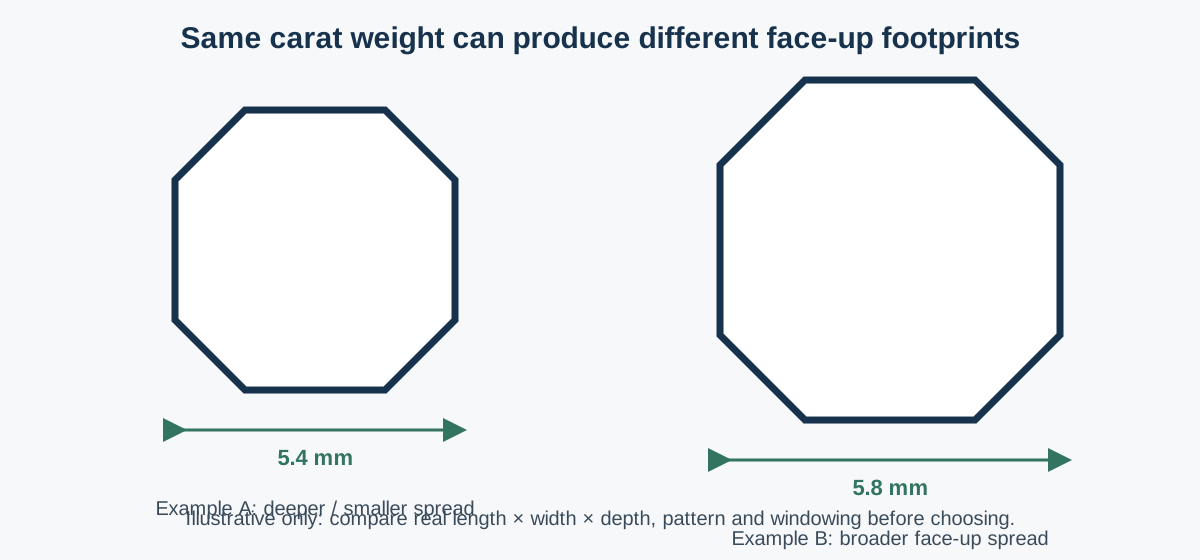
| Candidate | Carat | Length × width | What the numbers suggest | What still needs video |
|---|---|---|---|---|
| A | 1.00 ct | 5.40 × 5.37 mm | Compact face-up footprint | Whether extra depth produces attractive steps or simply hides weight |
| B | 1.00 ct | 5.80 × 5.75 mm | About 15% more face-up area in this illustration | Whether the broader spread introduces windowing or weak pattern |
Do not optimize millimeters alone. A wider diamond that windows badly is not a better value. Use dimensions to find efficient candidates, then let pattern and transparency decide.
Primary references & methodology
- GIA: How GIA Grades Diamonds — grading process, proportions, polish and symmetry.
- GIA: fancy-shape cut grading FAQ — explains that GIA does not currently assign an overall cut grade to fancy shapes.
- AsscherDiamond.com research methodology — how we distinguish laboratory facts, screening ranges and editorial observations.
- GIA: Diamond Carat Weight — explains that carat is a measure of weight, not face-up dimensions.
Screening ranges on this page are editorial starting points, not an official overall Asscher cut grade. See the Research Center for methodology and source context. Research methodology →