Asscher Face-Up Size: Why Carat Weight Can Look Smaller or Larger
Buy the size you can see, not just the weight on the label
Quick answer
Face-up size is the visible length and width of the diamond when viewed from above. Because Asschers are relatively deep, they often present a smaller face-up footprint than many buyers expect from carat weight alone. Efficient spread matters—but only if optical performance remains strong.
Key takeaways
- Carat is a unit of weight; face-up size is measured in millimeters.
- Depth and girdle can hide weight below the visible outline.
- Compare candidates of similar carat by actual length × width.
- A bigger spread is not a win if the center is windowed.
- Setting design affects perceived size even when diamond dimensions are identical.
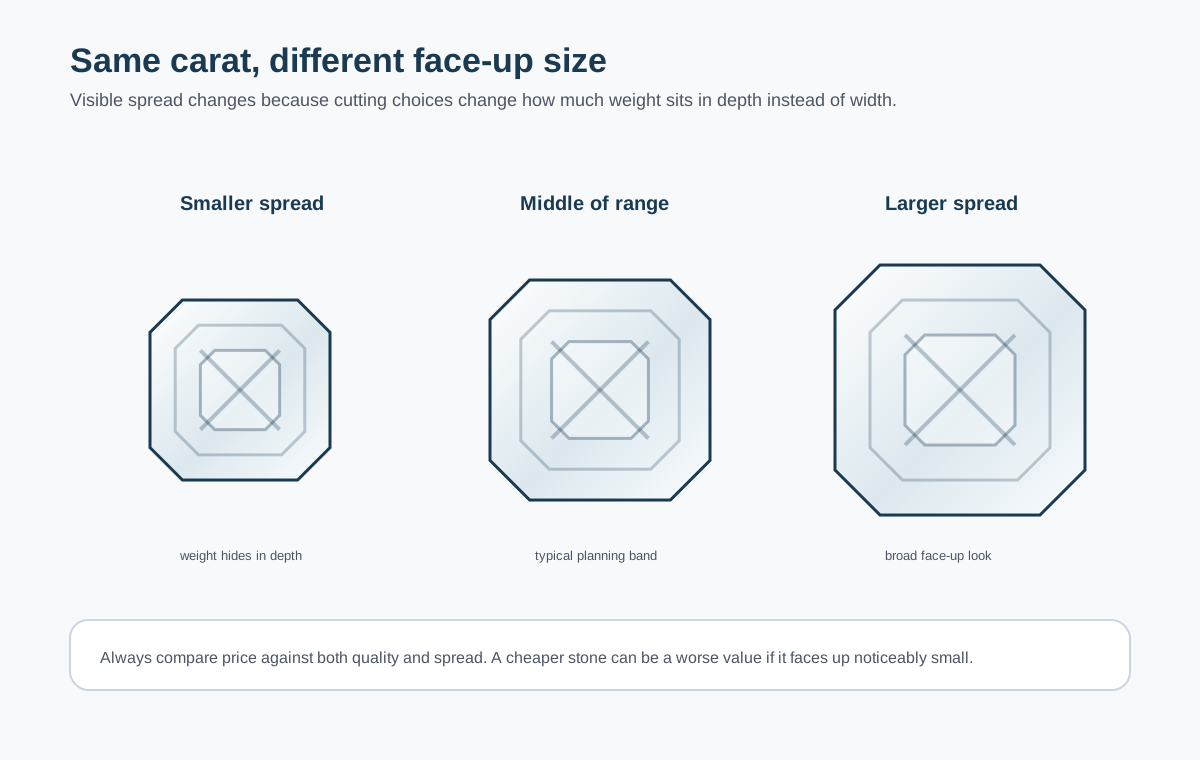
Carat is weight, not diameter
A diamond scale cannot tell you how large the stone looks on a finger. Two equal-weight Asschers can have different top dimensions because they distribute material differently through depth, girdle and corners.
Where weight can hide
Extra pavilion depth or a very thick girdle can add weight without adding much face-up area. That does not automatically make the stone bad, but it affects value if you are paying a premium for a carat milestone.
What efficient spread actually means
An efficient Asscher uses its weight to deliver a healthy visible outline while preserving the step-cut pattern. The goal is not the shallowest stone. Pushing spread too far can create light leakage and a transparent center.
A simple comparison method
- Choose two stones within roughly 5–10% carat weight.
- Record length and width in millimeters.
- Calculate or read L/W ratio.
- Check depth and table.
- Compare the videos for pattern/windowing.
- Compare total price against visible size and quality.
Perceived size on the hand
A thin band makes a center diamond look larger relative to the ring. Halos and bezels extend the visual footprint. Side stones broaden the composition. These are design effects, not changes to the diamond itself.
Use face-up size to escape carat milestones
Instead of insisting on 1.00, 1.50 or 2.00 ct, decide what width you want and search a band around the threshold. A well-spread stone just below a milestone can deliver nearly identical presence at a better price.
Compare face-up area, not just one measurement
For two near-square Asschers, multiplying length × width gives a quick footprint comparison. It is not a gemological cut grade, but it makes hidden-weight differences easier to see.
| Example | Dimensions | Approx. rectangle area | Interpretation |
|---|---|---|---|
| A | 5.40 × 5.37 mm | 29.0 mm² | Compact for the weight |
| B | 5.80 × 5.75 mm | 33.4 mm² | About 15% larger footprint than A |
The Asscher's clipped corners mean the true visible area is smaller than the simple rectangle calculation, so use this only for relative comparison between similar shapes. Then inspect the actual outline, corner size, windowing and windmill pattern.
Face-up size is especially helpful around carat milestones. A well-spread 0.90–0.95 ct Asscher can sometimes look surprisingly close to a deeper 1.00 ct stone while avoiding the psychological premium attached to the round number.
Primary references & methodology
- GIA: How GIA Grades Diamonds — grading process, proportions, polish and symmetry.
- GIA: fancy-shape cut grading FAQ — explains that GIA does not currently assign an overall cut grade to fancy shapes.
- AsscherDiamond.com research methodology — how we distinguish laboratory facts, screening ranges and editorial observations.