Asscher Cut Depth Guide: Percentage, Spread & Hidden Weight
Why deeper is not automatically worse—and why spread still matters
Quick answer
Depth percentage is a useful Asscher screening tool because it helps explain where a diamond carries its carat weight. But there is no single “ideal” number that guarantees performance. Compare depth with millimeter dimensions, table, pattern and video.
Key takeaways
- Asschers are naturally deeper than many shapes.
- Higher depth can reduce face-up spread if extra weight sits below the girdle.
- A shallower stone is not automatically better; it may introduce windowing or weak contrast.
- Compare actual measurements between stones of the same carat weight.
- Use depth as one filter in a multi-factor inspection.
What depth percentage means
Total depth is the vertical height of the diamond from table to culet. Depth percentage expresses that height relative to average width. It is a geometry metric, not a beauty score.
Depth and face-up spread
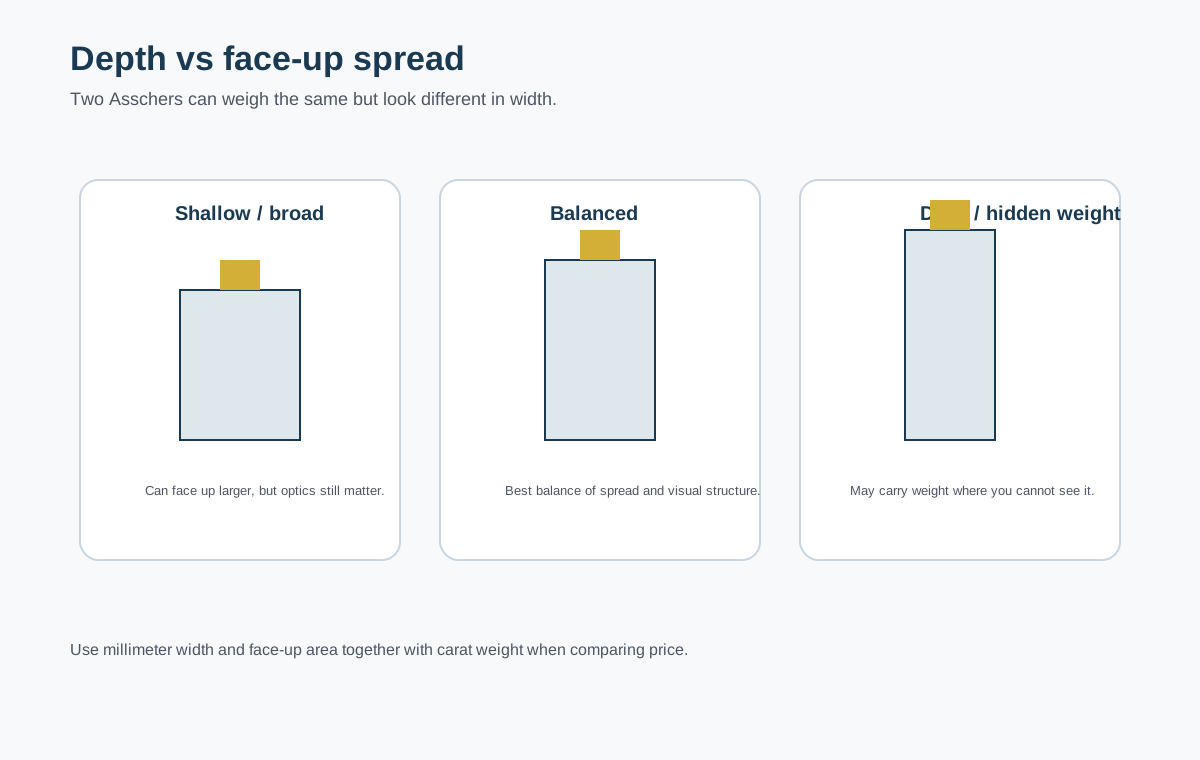
Carat is weight. Millimeters are size. If two Asschers both weigh 1.00 ct but one is materially deeper, the deeper stone may present a smaller outline because more weight is carried vertically. That is why “one carat” does not guarantee a specific visible size.
A useful screening range—not a cut grade
Many attractive Asschers fall roughly from the low 60s into the low 70s for total depth. Use that zone to flag unusual stones for closer inspection, not to reject everything outside it. Fancy-shape light performance is too complex to reduce to one depth number.
When a deep stone becomes inefficient
The concern is not that depth is inherently bad. The concern is paying for weight you cannot see. If a 1.20 ct stone faces up like a well-spread 1.00 ct alternative and does not deliver better pattern or beauty, the extra carat weight may offer poor value.
When shallow can create problems
Very shallow step cuts can allow light to leak through portions of the stone and can create a washed-out or windowed appearance. A broad face-up spread is attractive only if the optical pattern still holds together.
How to compare two Asschers
- Match carat weight within a narrow range.
- Compare length × width dimensions.
- Check depth and table percentages.
- Inspect both videos at similar magnification.
- Choose the stone with the stronger balance of spread, pattern and price—not simply the lower depth.
Primary references & methodology
- GIA: How GIA Grades Diamonds — grading process, proportions, polish and symmetry.
- GIA: fancy-shape cut grading FAQ — explains that GIA does not currently assign an overall cut grade to fancy shapes.
- AsscherDiamond.com research methodology — how we distinguish laboratory facts, screening ranges and editorial observations.
Screening ranges on this page are editorial starting points, not an official overall Asscher cut grade. See the Research Center for methodology and source context. Research methodology →