Asscher vs Round Brilliant
Architectural step-cut character versus the benchmark for brilliant sparkle
Quick answer
Choose Asscher if design, geometry and broad step-cut flashes matter more than maximum sparkle. Choose round brilliant if you want the strongest all-around brilliance, the deepest cut-grading research base, and the easiest shape to compare using standardized cut-performance criteria.
Key takeaways
- Start with light personality: step-cut pattern versus brilliant-style sparkle.
- Compare millimeter dimensions, not carat weight alone.
- Asscher step facets make direct visual inspection especially important.
- Shape averages are not substitutes for comparing actual stones.
- Use the Buyer Decision Matrix if you are comparing several shapes or priorities.
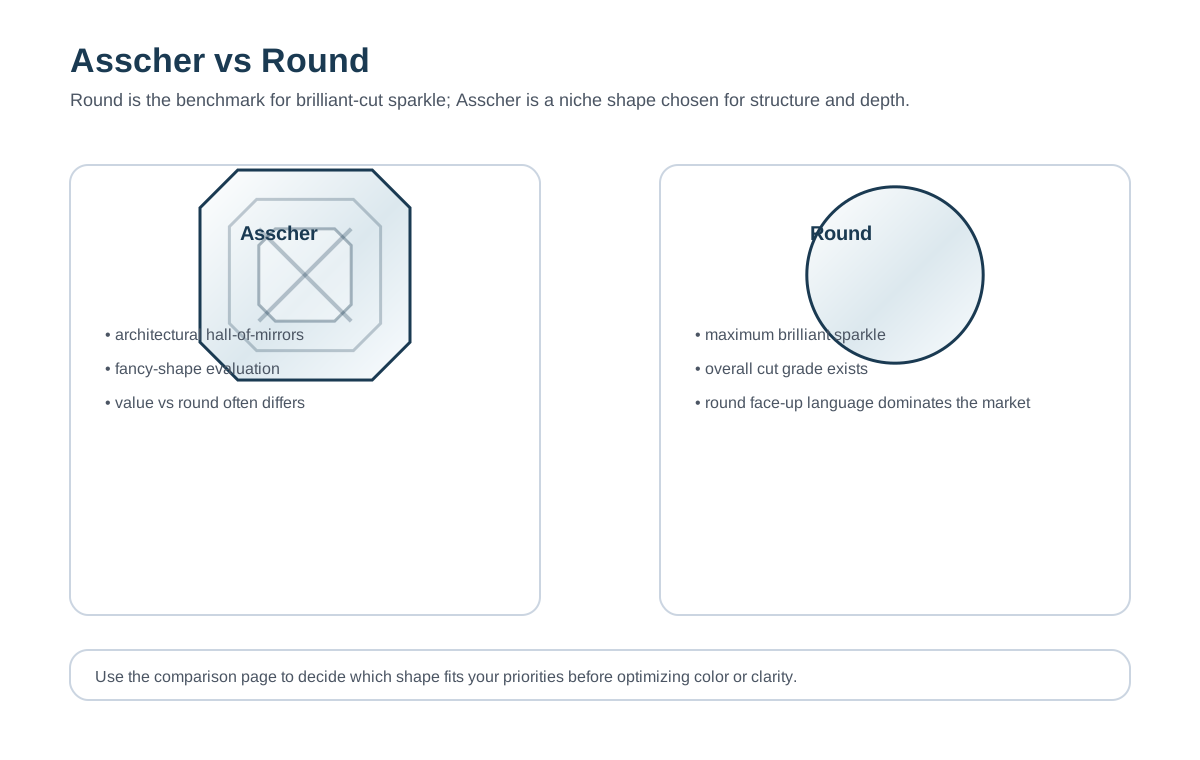
Asscher vs Round brilliant: comparison at a glance
| Feature | Asscher | Round brilliant |
|---|---|---|
| Cut family | Step cut | Brilliant cut |
| Outline | Square/octagonal | Round |
| Light style | Broad flashes, contrast, windmill | High brilliance, fire and scintillation |
| Overall GIA cut grade | Not assigned as a standard Asscher overall cut grade | Available for standard round brilliant |
| Face-up impression | Often compact for weight | Typically efficient and easy to compare |
| Clarity visibility | More revealing | Brilliant pattern can hide inclusions better |
| Best for | Distinctive Art Deco geometry | Maximum classic sparkle and standardized evaluation |
Sparkle is the central tradeoff
Round brilliant is optimized around brilliant light return, fire and scintillation. Asscher is not a less-successful round; it is a different visual system. It uses parallel step facets to create larger flashes and structured contrast. Buyers disappointed by an Asscher because it does not sparkle like a round usually chose the wrong cut family for their preference.
Cut grading and standardization
GIA provides an overall cut grade for standard round brilliant diamonds, but not the same overall Asscher cut grade. That makes Asscher buying more visually dependent: table, depth and symmetry are screening signals, while video and pattern quality remain crucial. See our GIA and Asscher certification guide and proportion reference.
Face-up size and carat
Round brilliants and Asschers distribute weight differently. Asschers can carry meaningful depth and therefore look smaller than buyers expect from carat alone. Compare millimeter width. If visible size is a priority, our face-up size guide explains how to evaluate spread rather than relying on weight.
Clarity and color strategy
The round’s busy facet pattern can hide some inclusions and distribute brightness differently. Asscher’s broad steps expose more of the interior, which can make inclusion placement especially important. That often shifts value strategy toward careful visual selection rather than simply copying round-brilliant grade targets.
Price and market depth
Round brilliant is the deepest, most standardized diamond market, which means enormous inventory and easy comparisons—but demand can also support higher pricing. Asscher inventory is narrower and individual visual quality can vary. Use matched grading, origin and millimeter size when comparing prices. The Asscher price guide provides a separate planning framework.
Who should choose which?
Choose Asscher if you want the diamond itself to look unusual, geometric and strongly Art Deco. Choose round if you want the classic benchmark for brilliance, maximum market selection and standardized cut grading. If sparkle is your first, second and third priority, round is the safer choice. If personality and pattern outrank brilliance, Asscher deserves the shortlist.
Next step: turn preferences into a buying profile
If you are comparing more than two shapes—or balancing budget, size, origin, clarity sensitivity, color sensitivity and setting style—use the Asscher Buyer Decision Matrix. It converts those priorities into a practical Asscher shopping profile and flags when another shape may fit the stated goal better.
Shape guides describe recurring optical and design differences, not guarantees about every diamond. Always confirm the grading report, dimensions and actual video for the stone you are considering.