Asscher vs Radiant Cut
Two cropped-corner shapes with opposite light personalities
Quick answer
Asscher and radiant cuts can both have clipped corners, but their optics are almost opposites. Asscher uses step facets for broad geometric flashes; radiant uses brilliant-style faceting for intense scintillation. Choose based on light personality first, then square versus elongated outline.
Key takeaways
- Start with light personality: step-cut pattern versus brilliant-style sparkle.
- Compare millimeter dimensions, not carat weight alone.
- Asscher step facets make direct visual inspection especially important.
- Shape averages are not substitutes for comparing actual stones.
- Use the Buyer Decision Matrix if you are comparing several shapes or priorities.
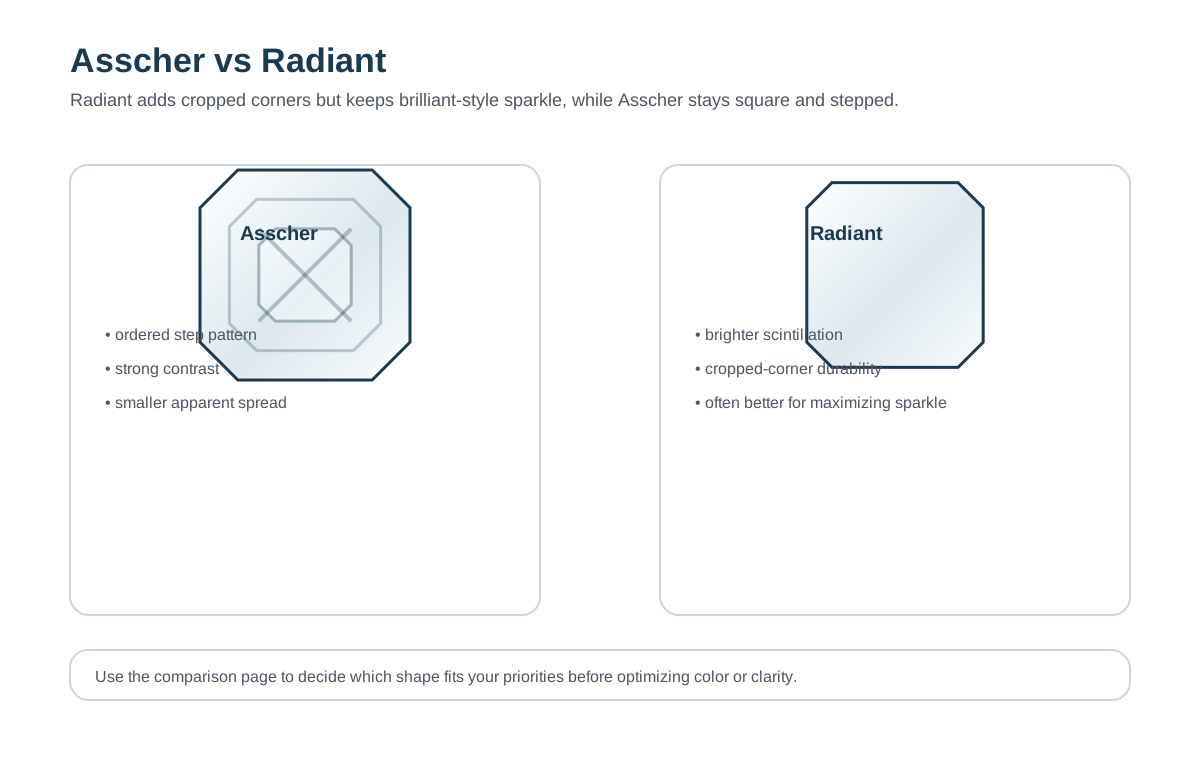
Asscher vs Radiant: comparison at a glance
| Feature | Asscher | Radiant |
|---|---|---|
| Cut family | Step cut | Brilliant / modified brilliant |
| Outline | Usually square, cropped corners | Square or rectangular, cropped corners |
| Light style | Broad steps and contrast | High sparkle, often busy scintillation |
| Pattern | Centered windmill / concentric geometry | Facet-dependent brilliant pattern |
| Clarity visibility | Relatively revealing | Often more forgiving |
| Shape flexibility | Mostly near-square | Square through noticeably elongated |
| Best for | Art Deco geometry | Sparkle plus cropped-corner durability |
The defining difference is light behavior
Radiants were designed to combine a rectangular or square outline with brilliant-style sparkle. Asschers intentionally do something else: they create a slower rhythm of bright and dark steps. If you are comparing them because the outlines look similar in a thumbnail, watch both in motion. The light response will usually make the decision quickly.
Square versus elongated options
Asscher buyers generally target a near-square ratio. Radiants can be square, moderately rectangular or strongly elongated. If finger-lengthening effect matters, a rectangular radiant provides an option the classic Asscher does not. If symmetry and a centered square pattern matter, Asscher is more aligned with that goal.
Clarity and color
Radiant faceting can camouflage some inclusions, while Asscher’s open steps tend to reveal them more readily. That does not mean every Asscher needs VS1 or better. Placement, relief, size and normal viewing distance matter. Start with our clarity guide, then inspect the actual stone.
Face-up size
Both shapes vary by depth and outline. Radiants can spread weight over an elongated footprint, while Asschers often retain more depth. Compare millimeter dimensions and visible area. The Asscher carat size chart and face-up size guide help normalize that comparison.
Durability and settings
Both shapes remove the sharp square corners found on princess cuts, which can simplify corner protection. But setting fit still matters. A rectangular radiant can suit east-west or elongated solitaire designs, while an Asscher often pairs naturally with geometric halos, baguette sides and Art Deco-inspired layouts.
Who should choose which?
Choose Asscher for controlled geometry, broad flashes and a square Art Deco identity. Choose radiant for stronger sparkle, shape flexibility and a brilliant-cut look with cropped corners. If you want “an Asscher that sparkles like a round,” you probably want a radiant instead of trying to force an Asscher to behave like a brilliant cut.
Next step: turn preferences into a buying profile
If you are comparing more than two shapes—or balancing budget, size, origin, clarity sensitivity, color sensitivity and setting style—use the Asscher Buyer Decision Matrix. It converts those priorities into a practical Asscher shopping profile and flags when another shape may fit the stated goal better.
Shape guides describe recurring optical and design differences, not guarantees about every diamond. Always confirm the grading report, dimensions and actual video for the stone you are considering.