Asscher Diamond Clarity Guide: VS2, VS1, VVS & Eye-Clean Choices
How to spend on clarity where the open step facets make it matter
Quick answer
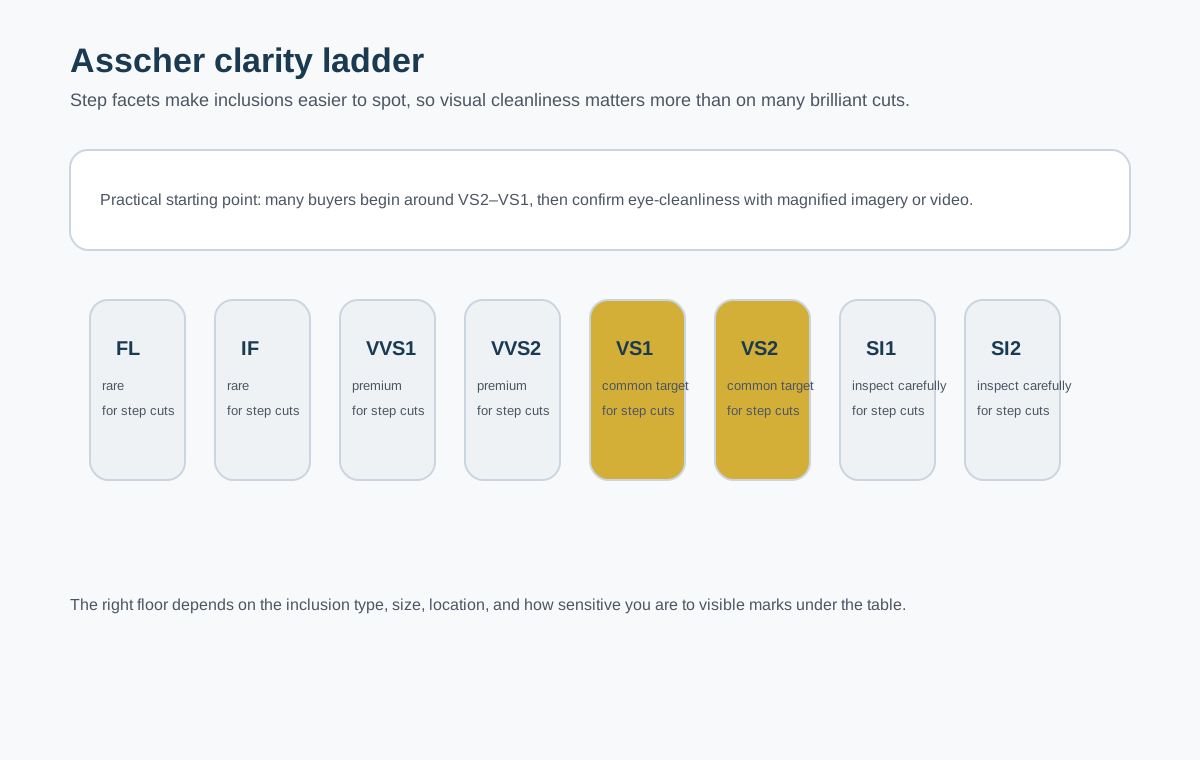
Asscher cuts tend to reveal inclusions more readily than brilliant cuts because the broad step facets and open table create less visual “camouflage.” For many buyers, VS2 is the first grade worth inspecting closely, but the right answer depends on inclusion type, location and the actual face-up video—not the grade label alone.
Key takeaways
- Clarity grades describe inclusion characteristics, not whether a specific stone will look clean to your eye.
- VS2 can be excellent value when inclusions are small, pale and away from the center.
- VS1 offers more margin when buying online or choosing a larger stone.
- VVS can be beautiful but often buys rarity rather than a visible face-up improvement.
- Always inspect the plotting diagram and magnified video together.
Why Asschers are less forgiving
Brilliant cuts break light into many small flashes, which can make some inclusions harder to notice during normal viewing. Asschers use long, mirror-like steps. That quieter optical pattern can make a dark crystal, centrally located cloud or reflective inclusion easier to see.
This does not mean every Asscher needs VVS clarity. It means placement and visibility matter more.
Practical grade strategy
| Grade | How to think about it |
|---|---|
| VVS1–VVS2 | Very high clarity; usually a rarity/luxury choice rather than a necessary visual upgrade. |
| VS1 | Strong safety margin for step cuts, especially in larger stones. |
| VS2 | Often the value target if the inclusion pattern is favorable and the stone is eye-clean. |
| SI1 | Can work occasionally, but requires close inspection; risky as a blind online purchase. |
Location matters as much as grade
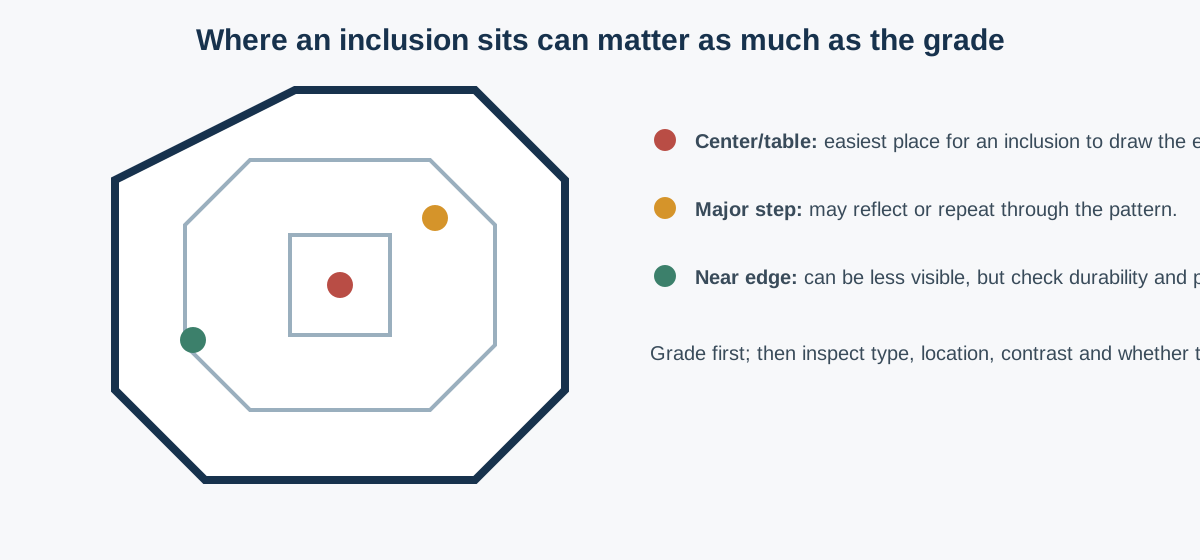
A small inclusion near a clipped corner may be far less noticeable than a similarly sized dark crystal directly under the table. Edge inclusions can sometimes be hidden by a prong, but durability also matters if a feature reaches the surface or sits near a vulnerable area. Do not use setting coverage as an excuse to ignore a potentially structural characteristic.
Look at the type and contrast of the inclusion
Black crystals and strongly reflective feathers can draw the eye. Pale pinpoints or fine internal features may disappear without magnification. Clouds deserve context: a small cloud can be harmless, while extensive clouding can affect transparency in some stones. The laboratory plot and comments help you understand what the grade is based on.
Larger Asschers deserve a stricter inspection
As face-up size increases, the open center becomes easier to examine with the naked eye. A VS2 that is completely clean-looking around one carat may not behave the same way in a much larger stone. Treat clarity recommendations as a starting point and scale your scrutiny with size.
Clarity checklist before purchase
- Read the lab report and identify the grade-setting inclusion.
- Locate it in the plotting diagram or seller video.
- Check face-up at normal size, not only at 20× magnification.
- Rotate the stone: reflective inclusions can appear/disappear with angle.
- Ask the retailer directly whether the stone is eye-clean at normal viewing distance.
Where an inclusion sits can matter as much as the grade
| Inclusion situation | Why it matters in an Asscher | What to do |
|---|---|---|
| Dark inclusion under the table | The open center can make it easy to locate repeatedly. | Reject if visible at normal viewing distance. |
| Inclusion near a major step facet | Reflections can make one inclusion appear more than once. | Rotate the stone and see whether the mark repeats. |
| Feather/chip near girdle or clipped corner | Visibility may be low, but durability and setting pressure matter. | Review the grading plot and ask how the setting will protect it. |
| Small pale inclusion near edge | Often less distracting face-up. | Potential value if it is eye-clean and not a durability concern. |
Practical rule: use the clarity grade to narrow the list, then judge type, location, contrast and reflections. A VS2 that is clean to your eye can be a better purchase than paying for VVS rarity you cannot see.
Primary references & methodology
- GIA: How GIA Grades Diamonds — grading process, proportions, polish and symmetry.
- GIA: fancy-shape cut grading FAQ — explains that GIA does not currently assign an overall cut grade to fancy shapes.
- AsscherDiamond.com research methodology — how we distinguish laboratory facts, screening ranges and editorial observations.
- GIA: Buying a Quality Diamond — notes that inclusions are generally easier to see in step cuts because their facets are larger and less visually complex.