Asscher Diamond Color Guide: D–J Grades, Settings & Value
Near-colorless value without overspending for a grade you cannot see
Quick answer
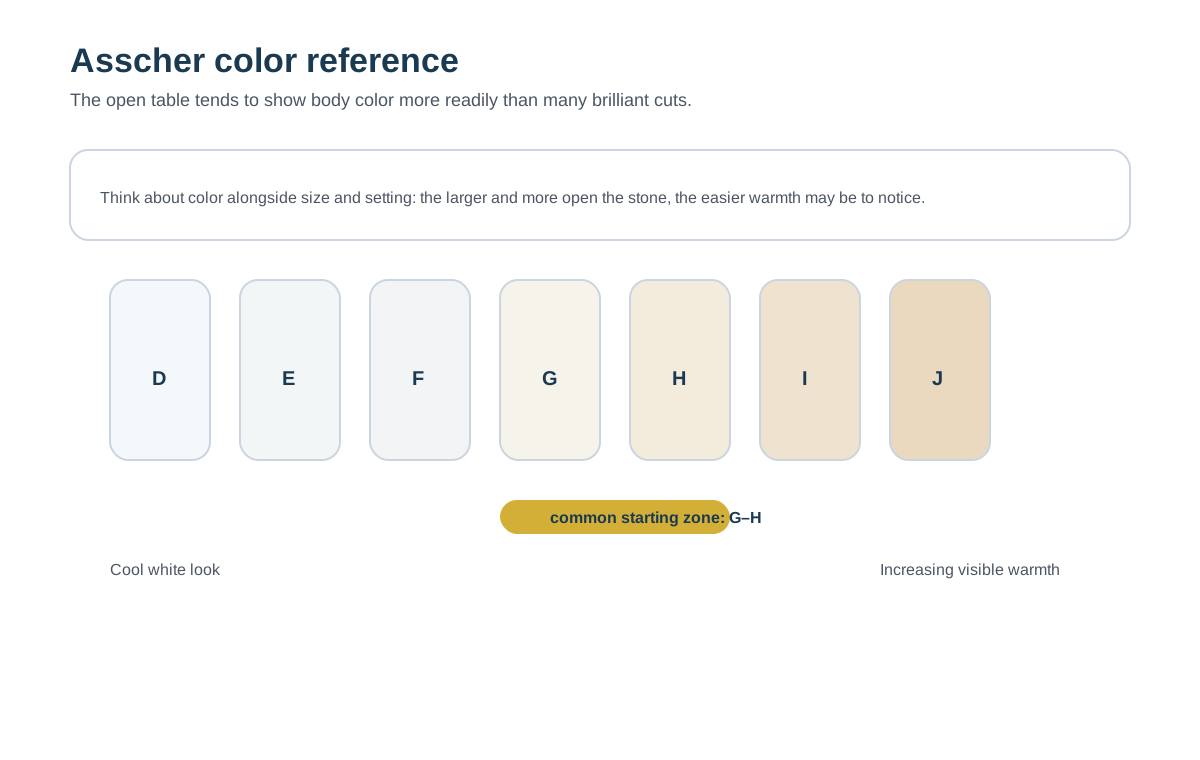
Asscher cuts can show body color more readily than many brilliant cuts because of their broad step facets. For many buyers, G–H is a practical value zone, while F or higher may appeal to people who want a colder look or are highly color-sensitive. The setting metal and carat size can shift the choice.
Key takeaways
- Color is graded face-down under controlled conditions; your ring is viewed face-up in real lighting.
- G–H is often a strong compromise between near-colorless appearance and price.
- Larger stones can make warmth easier to notice.
- White-metal settings create more contrast with warmer diamond color than yellow or rose gold.
- Compare actual videos side-by-side when possible; personal color sensitivity varies.
Why step facets can reveal warmth
An Asscher's large, clean steps produce broad flashes rather than the high-frequency sparkle of a round brilliant. That visual openness can make subtle body color easier to perceive. The clipped corners can also expose color from different viewing angles.
That does not mean you must buy a colorless D–F stone. It means the trade-off should be evaluated visually.
A practical way to think about color grades
| Range | Buyer profile |
|---|---|
| D–F | Colorless grades for buyers prioritizing a crisp, icy appearance or rarity. |
| G–H | Near-colorless value zone for many Asscher buyers. |
| I–J | Potential value if you like slight warmth, use warmer metal, or prioritize size. |
These are not rules. Some H stones look exceptionally white face-up, while a color-sensitive viewer may notice tint in another.
Setting metal changes the context
Platinum and white gold create a bright white frame, which can make warmth in a lower-color diamond more noticeable. Yellow and rose gold can visually integrate warmer color and make lower grades feel intentional. If the ring has a halo or side stones, match their color closely enough that the center does not look obviously warmer by comparison.
Bigger stones show more body color
All else equal, color becomes easier to perceive as the diamond gets larger because there is simply more material and a broader visual field. A grade that feels completely neutral in a smaller Asscher may show more warmth at two carats or above.
Natural vs lab-grown: same grading scale, different budget trade-off
Laboratory-grown diamonds are graded for color using the same D-to-Z terminology when issued an appropriate grading report. Because lab-grown pricing can reduce the cost pressure of moving up a color grade, some buyers choose F–G simply because the incremental cost is smaller. The visual decision remains the same: compare the actual stone.
Color checklist
- Decide whether you prefer icy white, neutral, or a hint of warmth.
- Evaluate the stone against the intended metal color.
- Compare videos under similar lighting—not unrelated product photos.
- Check the side view as well as face-up appearance.
- Do not pay for D–F automatically if you cannot see a meaningful difference.
Match color grade to the whole ring—not a letter in isolation
| Your priority | Reasonable starting range | What can change the answer |
|---|---|---|
| Crisp white look in platinum/white gold | F–H | Color sensitivity, stone size and side stones |
| Balanced value in white metal | G–I | Compare actual stones face-up and from the side |
| Yellow/rose gold setting | H–J can be worth testing | A white-metal head or halo can make warmth more noticeable by contrast |
| Large Asscher where body color is easier to notice | Move one grade higher if color-sensitive | Personal preference matters more than a universal threshold |
Compare candidates of similar size and clarity against the same neutral background. Then view them beside the metal and side stones you actually plan to use. That tells you more than memorizing “G is good” or “H is value.”
Primary references & methodology
- GIA: How GIA Grades Diamonds — grading process, proportions, polish and symmetry.
- GIA: fancy-shape cut grading FAQ — explains that GIA does not currently assign an overall cut grade to fancy shapes.
- AsscherDiamond.com research methodology — how we distinguish laboratory facts, screening ranges and editorial observations.
- GIA: Diamond Color — explains the D-to-Z color scale and the role of controlled comparison in color grading.