Asscher vs Princess Cut
Step-cut geometry versus brilliant-cut sparkle — a practical buyer comparison
Quick answer
Choose an Asscher if you want an architectural Art Deco look, broad step-cut flashes, and a visible windmill pattern. Choose a princess cut if you want much stronger scintillation and a more brilliant, energetic sparkle while keeping a square outline.
Key takeaways
- Start with light personality: step-cut pattern versus brilliant-style sparkle.
- Compare millimeter dimensions, not carat weight alone.
- Asscher step facets make direct visual inspection especially important.
- Shape averages are not substitutes for comparing actual stones.
- Use the Buyer Decision Matrix if you are comparing several shapes or priorities.
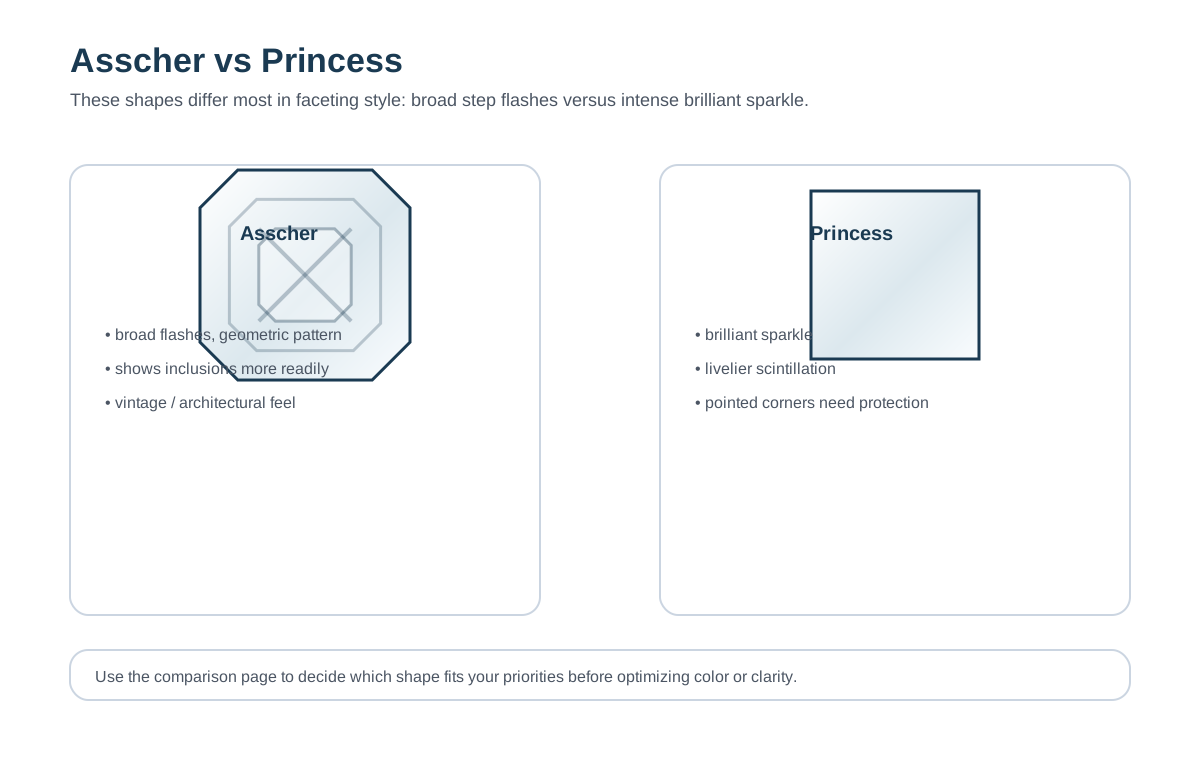
Asscher vs Princess: comparison at a glance
| Feature | Asscher | Princess |
|---|---|---|
| Cut family | Step cut | Modified brilliant |
| Typical outline | Square with cropped corners | Square with pointed corners |
| Light style | Broad flashes, contrast, windmill | High scintillation and many small flashes |
| Face-up impression | Often compact for its weight | Can look relatively large for weight, depending on cut |
| Clarity visibility | Inclusions can be easier to see | Brilliant faceting can hide some inclusions better |
| Corner durability | Cropped corners are less exposed | Sharp corners need secure prong protection |
| Best for | Art Deco geometry, calm flashes | Maximum sparkle in a square shape |
Sparkle and visual personality
The difference is not subtle. Asschers organize light into broad steps, alternating bright and dark zones, and a centered pattern. Princess cuts break light into many smaller flashes. A shopper who says “I want the square shape but as much sparkle as possible” is usually describing the princess side of the comparison. A shopper who wants pattern, symmetry, and vintage architecture is describing the Asscher side.
Face-up size and carat efficiency
Asschers are commonly deeper than many brilliant shapes, so carat weight can be distributed vertically instead of across the visible top surface. Princess cuts can also vary substantially, but their square brilliant architecture often gives a different size impression. Compare millimeter dimensions, not carat weight alone. Our Asscher face-up size guide explains the distinction.
Clarity and color sensitivity
Step facets act like windows into the diamond. That can make inclusions and body color more obvious in an Asscher than in a lively princess cut. Do not respond by automatically buying the highest grades; use magnified video, the grading report, and normal viewing distance. See the Asscher clarity guide and color guide.
Durability and setting choice
The princess cut’s pointed corners are its most obvious mechanical vulnerability and need thoughtful prong or bezel protection. An Asscher’s cropped corners create an octagonal outline and remove those needle-like points, although any diamond still needs a properly fitted setting. If you live an active lifestyle, compare not just hardness but exposed geometry and mounting design.
Price and value
Shape alone does not determine price. Carat, color, clarity, origin, grading report, proportions and seller all matter. Compare like with like. An Asscher that looks smaller than a same-carat princess may still be the better choice if the step pattern is what you value; a princess may deliver more perceived sparkle per dollar if brilliance is the goal. Use the price guide for Asscher budgeting.
Who should choose which?
Choose Asscher if you repeatedly prefer clean geometry, vintage/Art Deco styling, clipped corners and broad flashes. Choose princess if your first reaction to diamonds is about sparkle and you want a square silhouette without giving up brilliant-cut energy. If you are still split, compare videos at similar millimeter widths rather than similar carat weights.
Next step: turn preferences into a buying profile
If you are comparing more than two shapes—or balancing budget, size, origin, clarity sensitivity, color sensitivity and setting style—use the Asscher Buyer Decision Matrix. It converts those priorities into a practical Asscher shopping profile and flags when another shape may fit the stated goal better.
Shape guides describe recurring optical and design differences, not guarantees about every diamond. Always confirm the grading report, dimensions and actual video for the stone you are considering.