Asscher Windmill Pattern Guide: What Good Step-Cut Contrast Looks Like
The visual signature that numbers cannot capture
Quick answer
The “windmill” is the cross-like or X-shaped contrast pattern many buyers notice in an Asscher. A strong stone usually shows organized, balanced steps that turn on and off as the diamond moves. The goal is not maximum brightness; it is coherent contrast without a persistent window or dead center.
Key takeaways
- Windmill is an informal visual term, not a laboratory grade.
- Good Asschers show symmetrical, organized step reflections.
- Some dark contrast is necessary and attractive.
- Persistent transparent areas suggest windowing; persistent black areas can indicate excessive extinction.
- Video is more useful than a static glamour photo.
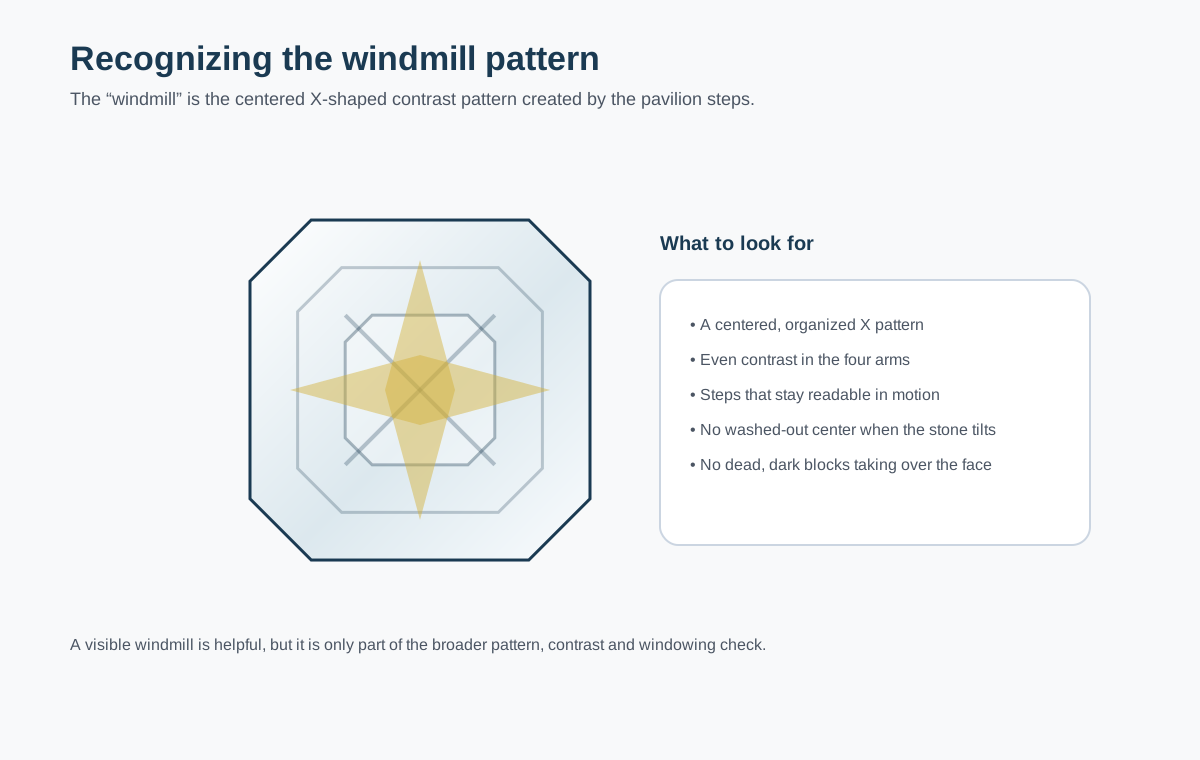
What buyers mean by “windmill”
Asscher cuts use concentric step facets arranged around a square outline with clipped corners. When viewed face-up, those steps can create an X-like pattern that resembles windmill blades. The term is descriptive buyer language; it is not a formal GIA quality grade.
Why dark contrast is not automatically bad
Diamonds need contrast for pattern. If every facet returned the same brightness at the same time, the stone would look flat. Attractive step cuts alternate broad light and dark reflections as viewing angle changes. The key is balance and responsiveness.
Look for organized symmetry
In a strong Asscher, the steps tend to look centered and orderly, with clipped corners that feel balanced. The pattern should not look twisted, lopsided or abruptly broken on one side. Laboratory symmetry grade provides finish information, but the face-up pattern still deserves direct inspection.
Judge the pattern in motion
A single still frame can make almost any diamond look unusually bright or dark. Use a slow 360° video and watch the center through several angles. A good pattern should change rather than remain frozen.
Three weak-pattern warning signs
- Persistent window: an area stays transparent enough that you can visually “see through” the diamond.
- Persistent extinction: broad zones remain black through normal movement rather than contributing dynamic contrast.
- Disorganized steps: reflections lack the concentric, architectural character that makes the Asscher distinctive.
Video inspection checklist
- Start face-up.
- Watch the center and four diagonal arms.
- Rotate through multiple angles.
- Check whether bright/dark zones exchange naturally.
- Compare two or three stones side-by-side at similar magnification.
A simple windmill-pattern test
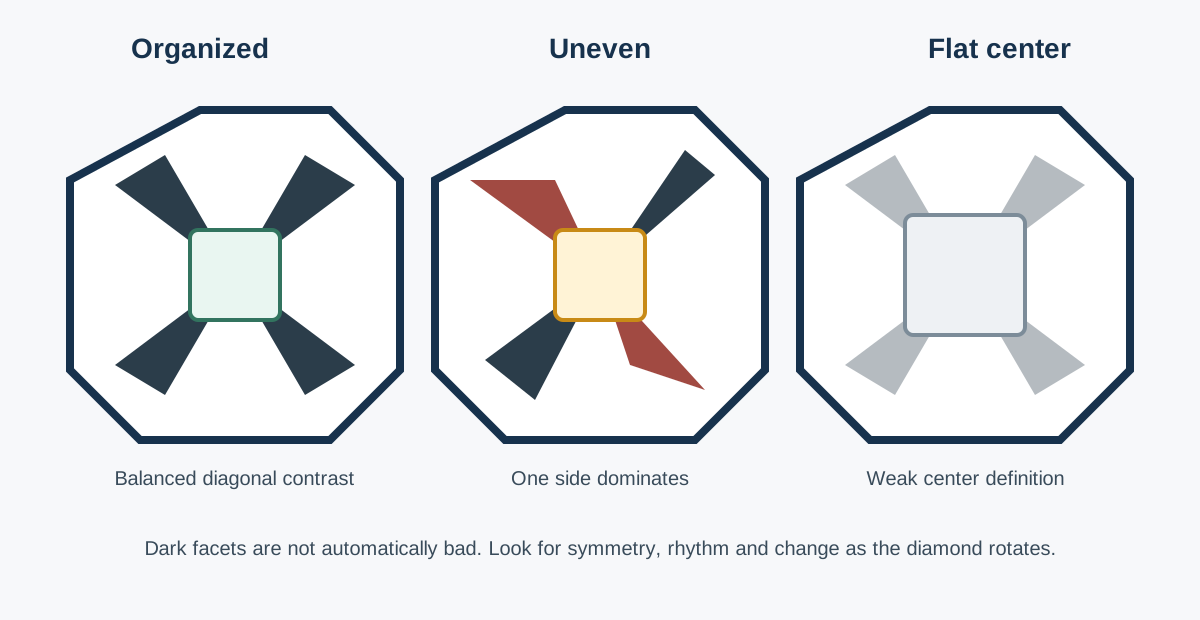
| Check | Healthy sign | Warning sign |
|---|---|---|
| Four diagonal arms | Similar visual weight and spacing | One arm dominates or disappears |
| Center | Distinct, layered steps | Flat, washed-out or permanently black center |
| Motion | Contrast switches as the diamond rotates | Pattern stays frozen or chaotic |
| Symmetry | Opposing corners read similarly | Obvious left/right imbalance |
Do not chase a photograph of a “perfect” windmill. Camera angle, environment and lighting change the pattern. Use stills to spot asymmetry, then use video to judge whether the geometry stays coherent through movement.
Primary references & methodology
- GIA: How GIA Grades Diamonds — grading process, proportions, polish and symmetry.
- GIA: fancy-shape cut grading FAQ — explains that GIA does not currently assign an overall cut grade to fancy shapes.
- AsscherDiamond.com research methodology — how we distinguish laboratory facts, screening ranges and editorial observations.
- GIA: Diamond Cut — describes scintillation as the pattern of light and dark areas and reinforces evaluating the whole face-up appearance.